
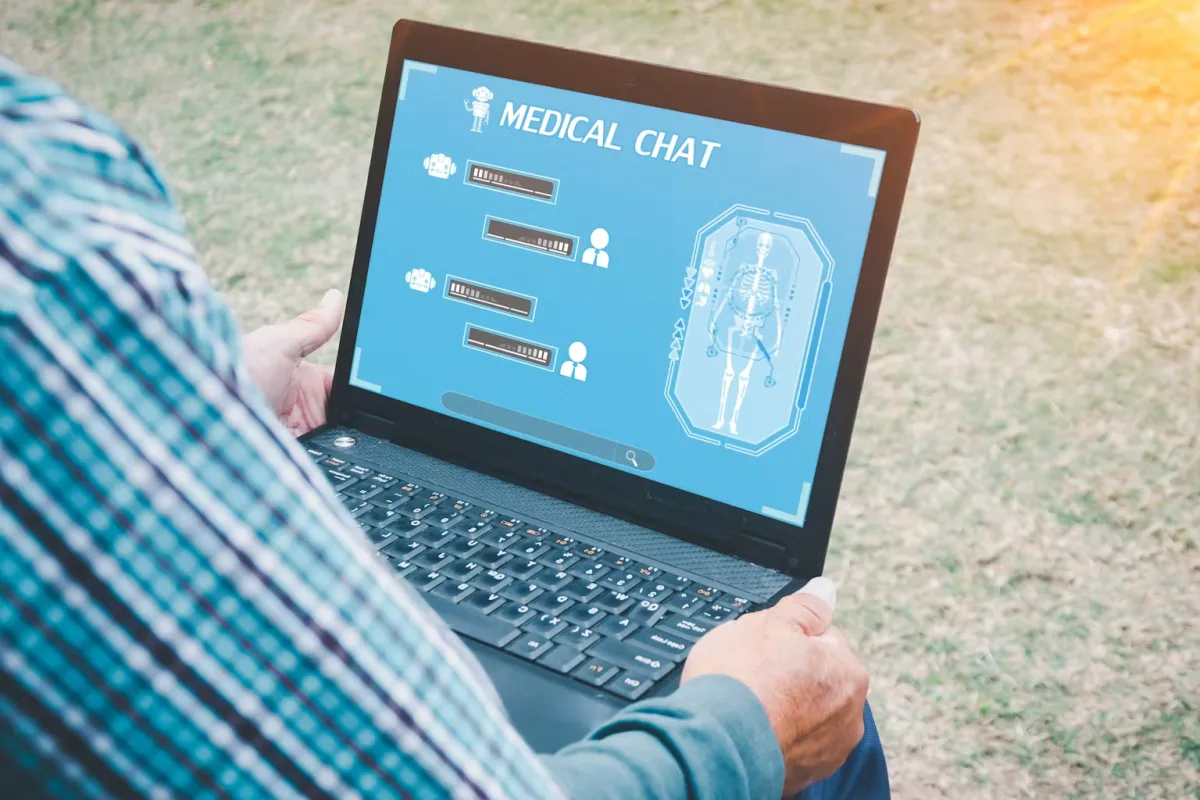
A father’s concern over his toddler’s persistent fever and ear pulling, or a 65 year old woman noticing increasing fatigue and shortness of breath, both could now turn to AI chatbots for an initial diagnosis. And in many cases, those answers may be correct.
Artificial intelligence tools like ChatGPT and OpenAI’s o1 model are rapidly improving at identifying health conditions with remarkable accuracy. A 2026 study published in the New England Journal of Medicine found that o1 achieved a 78% accuracy rate in diagnosing complex medical cases, surpassing even experienced physicians in some emergency room scenarios. Similarly, a 2024 study demonstrated that ChatGPT, when used independently, outperformed doctors in diagnosing intricate cases, including when physicians themselves consulted the AI.
Yet while AI excels at pattern recognition, its limitations become stark when it comes to treatment decisions. Diagnosis is only half the challenge in medicine; the other half, determining the best course of action, remains firmly within the domain of human expertise.
Consider two patients with identical symptoms: a fever and ear pain in a child, or fatigue and breathlessness in an adult. AI may correctly identify an ear infection or potential cardiac issues, but the real complexity lies in deciding what to do next. Should the child receive over the counter pain relief, or is an antibiotic necessary? For the older adult, is a cardiologist’s evaluation urgent, or can lifestyle adjustments suffice?
Doctors don’t approach each patient from scratch. Over years of practice, they develop mental frameworks called illness scripts, mental shortcuts that capture how diseases typically present, who they affect, and how they progress. When a patient’s symptoms align with a familiar pattern, a doctor can quickly rule out discrepancies, such as an unusual exposure or a symptom that doesn’t fit the expected profile. This process allows clinicians to focus on nuanced details that AI may overlook.
While AI thrives on pattern matching, analyzing vast datasets to predict the next word or diagnosis, it struggles with the art of medical management. Unlike a single correct answer, treatment decisions often involve weighing multiple reasonable options. What tests should be run? Which treatments are most effective? How should the patient’s condition be monitored? These questions require judgment, experience, and an understanding of individual patient needs, factors that AI, for now, cannot fully replicate.
Take the case of two 68 year old men, both diagnosed with early stage prostate cancer. While their biopsies may show identical results, their treatment plans could differ dramatically based on factors like overall health, personal preferences, and risk tolerance. AI lacks the capacity to weigh these variables and prioritize the best course of action for a specific patient.
For now, AI remains a valuable tool for initial symptom assessment, but it should not replace professional medical advice. When in doubt, consulting a healthcare provider ensures that diagnosis and treatment align with the unique needs of each individual.








DISCUSSION (0)