The creation of highly strained molecular structures, once considered nearly impossible to synthesize, has taken a major leap forward thanks to a photocatalytic breakthrough that could revolutionize drug development and advanced materials.
Researchers at the University of Münster’s Institute of Organic Chemistry have pioneered a light powered method to produce housane molecules, compact ring shaped compounds named for their resemblance to a simple house drawing. These molecules store immense internal tension, making them uniquely valuable as building blocks for pharmaceuticals and specialty materials.
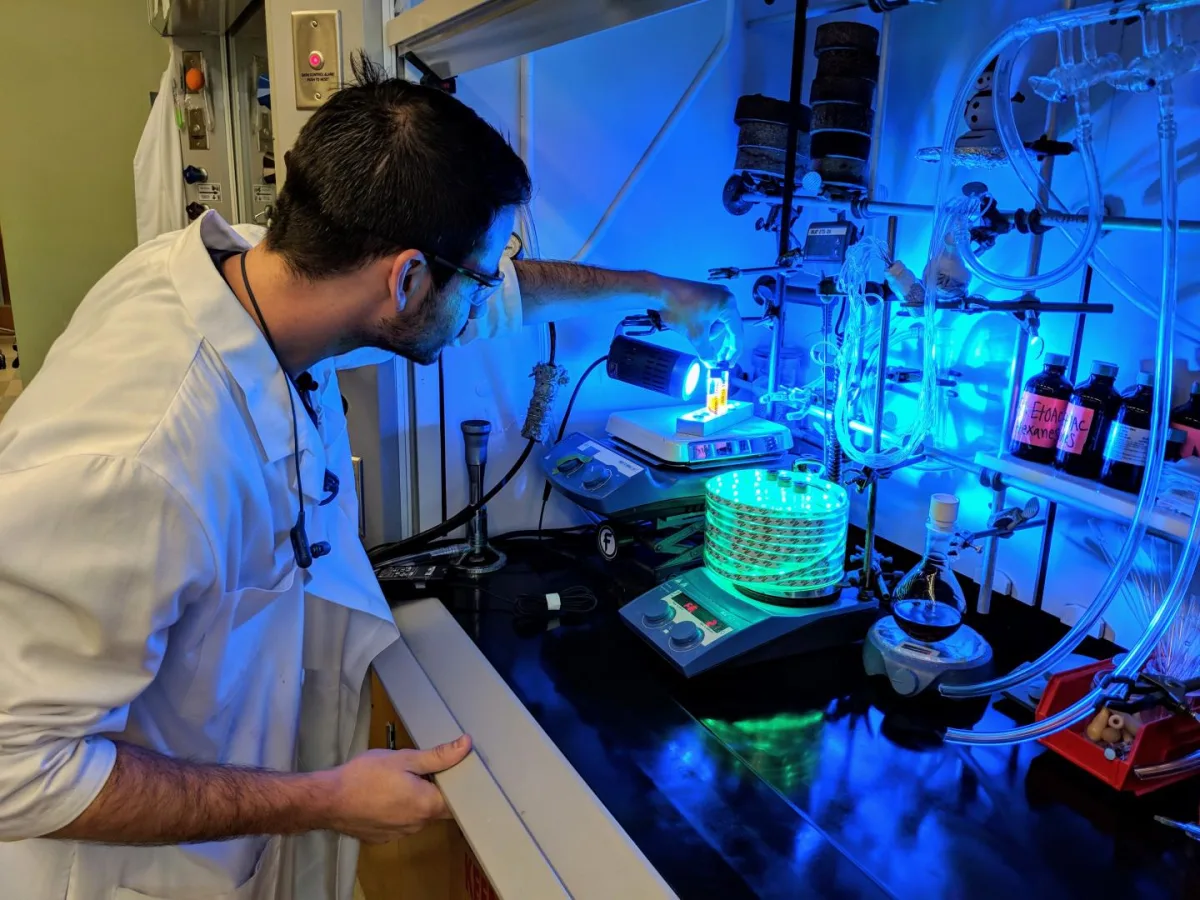
Traditional synthesis methods for housanes have relied on extreme conditions, such as high temperatures and harsh catalysts, which often limit their practical use. The new approach, however, employs photocatalysis, a process where light activates a catalyst to drive chemical reactions under milder conditions. By carefully tuning the molecular side chains of starting materials, the team suppressed unwanted side reactions, enabling a cleaner and more efficient transformation into the desired strained structures.
‘This process is normally difficult because it requires energy input,’ explained lead researcher Prof. Frank Glorius. ‘Photocatalysis provides the necessary energy while maintaining precise control over the reaction pathway.’ The method also preserves functional groups, critical molecular features that influence a compound’s behavior, something earlier techniques struggled to accommodate.
The breakthrough holds significant promise for drug development, as many pharmaceuticals, including penicillin, rely on strained ring structures to drive key chemical reactions. By offering a more accessible and scalable way to produce housanes, the new technique could accelerate the discovery of novel therapeutics. Additionally, the method may expand the possibilities for advanced materials, where high energy molecules could enable new properties in plastics, coatings, and other synthetic applications.
While still in early stages of research, the findings, published in a forthcoming scientific journal, highlight how photocatalysis could reshape synthetic chemistry, providing a gentler yet more powerful alternative to conventional methods. The next steps will focus on refining the technique for industrial scale applications and exploring its broader potential in materials science.







DISCUSSION (0)