
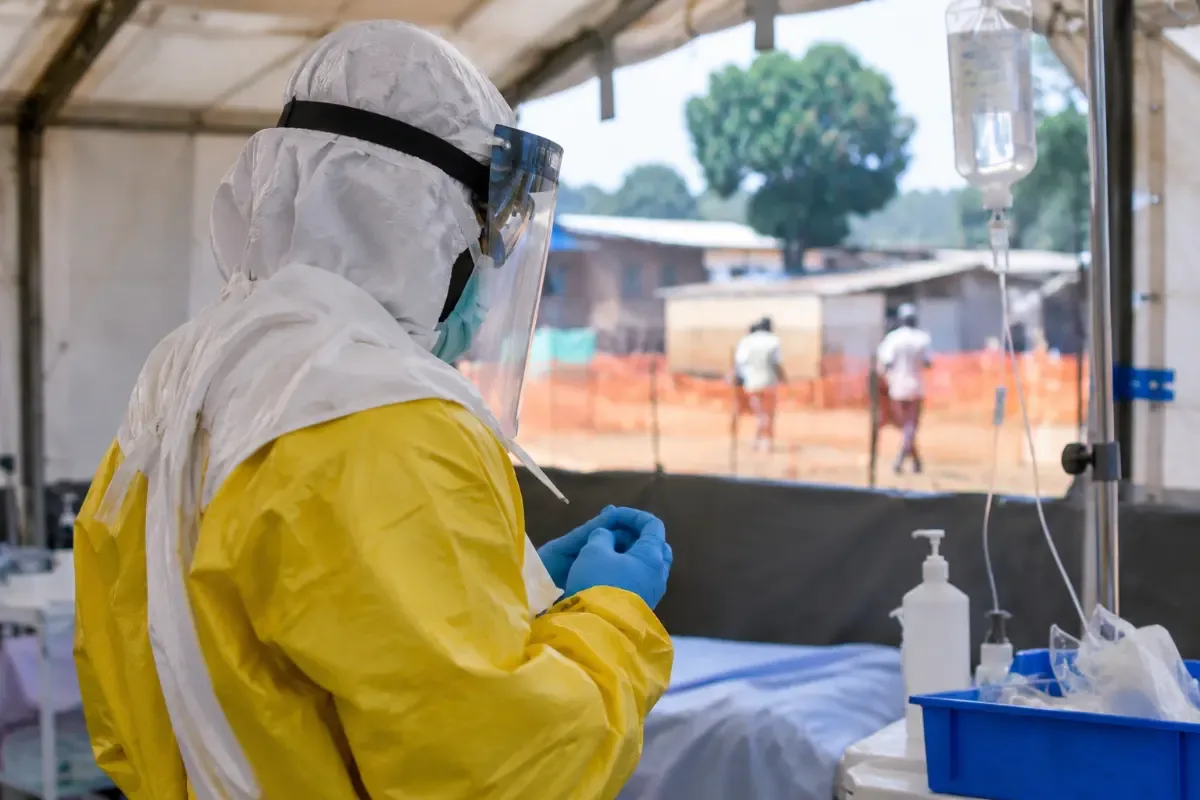
The Democratic Republic of the Congo (DRC) has recorded more than 12,000 confirmed Ebola infections, as escalating violence in the country's east continues to undermine efforts to contain its deadliest outbreak on record.
Government figures released on Thursday showed that laboratory confirmed infections had reached 12,021, including 5,904 deaths. The outbreak has spread across eight of the country's 26 provinces since it was declared in May, Reuters reported.
Security conditions have become a major obstacle to the response, particularly in Ituri province, where clashes between the Congolese army and fighters from the Convention for the Popular Revolution (CRP) have displaced civilians and restricted access to affected communities.
The violence has also forced health workers and humanitarian personnel to suspend or relocate some operations. According to the Associated Press, about a dozen people, including two World Health Organization (WHO) staff members and Congolese health officials, were evacuated to Bunia after being trapped for three days in a hospital in Akwe amid intense crossfire, AP reported.
The CRP is led by Thomas Lubanga, who was convicted by the International Criminal Court in 2012 of recruiting and using child soldiers. Although the group announced a unilateral ceasefire in May, fighting has continued in the region.
The outbreak is caused by the Bundibugyo species of the Ebola virus, a relatively rare strain for which there are currently no approved vaccines or specific treatments. Its continued spread has been complicated by delayed detection, insecurity and weaknesses in the country's health infrastructure, according to the World Health Organization (WHO).
For more background on the outbreak, read Flobstar's earlier report.
The scale of the crisis is also evident in the experiences of teams working in affected communities. Sandrine Buju, a humanitarian worker involved in the response, told the Associated Press that her team came under gunfire on Monday while returning to Bunia after training community volunteers. The shots were fired approximately 15 metres from their vehicle.
The driver turned back, and the team sought shelter at a United Nations peacekeeping base. Peacekeepers later escorted them through two areas of active fighting to reach safety in Bunia.
The insecurity threatens more than the safety of response personnel. It can prevent health teams from tracing contacts, identifying new infections, delivering medical supplies and conducting safe burials, all of which are essential to interrupting Ebola transmission. With cases and deaths continuing to rise, securing access to affected communities remains a critical challenge for the response.








DISCUSSION (0)