
A small but resilient subset of tumor cells may hold the key to preventing medulloblastoma, the most common malignant pediatric brain tumor, from returning after treatment, according to new preclinical research from the Medical University of South Carolina’s Hollings Cancer Center.
While survival rates for children diagnosed with medulloblastoma have improved, roughly 30% of patients experience relapse, and once the cancer returns, long term survival drops to near zero. The challenge lies in the tumor’s ability to evade standard therapies, thanks to a group of slow dividing, self renewing cells that persist after treatment and drive regrowth.
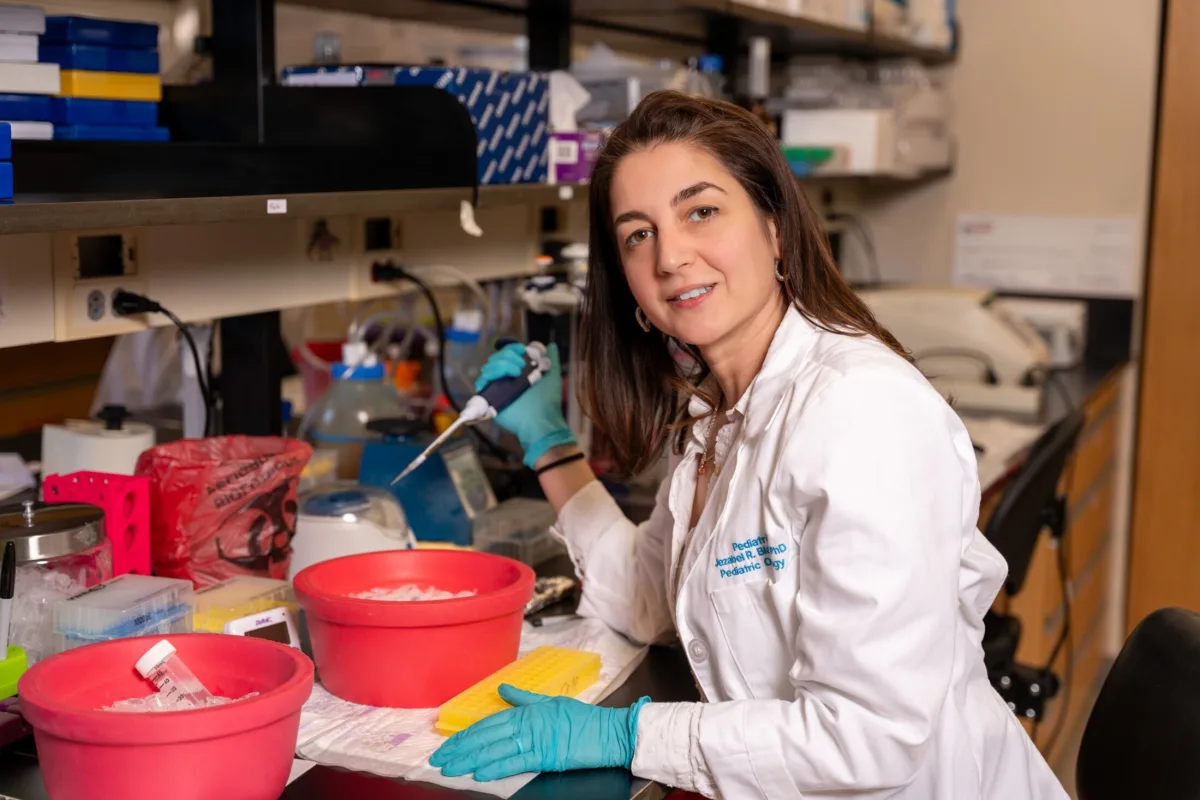
“These cells are resistant to therapy,” said Dr. Jezabel Rodriguez Blanco, a cancer researcher at Hollings and the Darby Children’s Research Institute. “They don’t divide as much, so many treatments miss them, but they’re the ones that enable the tumor to come back.”
In a study published in Cell Death & Disease, Blanco’s team identified a strategy to disrupt the survival signals of these relapse prone cells. The approach targets two critical cancer pathways: the Glioma associated oncogene homolog (GLI), which promotes tumor growth, and the Wingless related integration site (WNT) pathway, which sustains self renewal, the ability of cancer cells to regenerate the tumor indefinitely.
The researchers focused on a protein called CK1α, which regulates both pathways. By activating CK1α, they tested pyrvinium, a drug already approved by the FDA for other uses, with promising results. Pyrvinium suppressed GLI signaling, reducing tumor growth, while also disrupting WNT driven self renewal, an effect not seen with GLI targeting drugs alone.
In preclinical models, the dual blockade extended the time before relapse and lowered the overall risk of recurrence. “Cancer cells are very good at escaping when you hit just one pathway,” Blanco explained. “If you hit both, you have a better chance of preventing that escape.”
However, the research faces significant hurdles before reaching patients. Pyrvinium does not easily cross the blood brain barrier, limiting its direct use in brain tumors. The team tested a modified version of the drug that can penetrate the brain, showing early promise in animal models.
While the findings are encouraging, Blanco emphasized that the work remains in its early stages. “This is working very well in our models,” she said, “but there’s a long path before it becomes a treatment for patients.” Further investigation into drug delivery and clinical testing will be necessary before this approach can be translated into a viable therapy.
The study highlights a potential new direction in combating medulloblastoma relapse, offering hope for children whose cancer has previously proven resistant to conventional treatments.








DISCUSSION (0)