
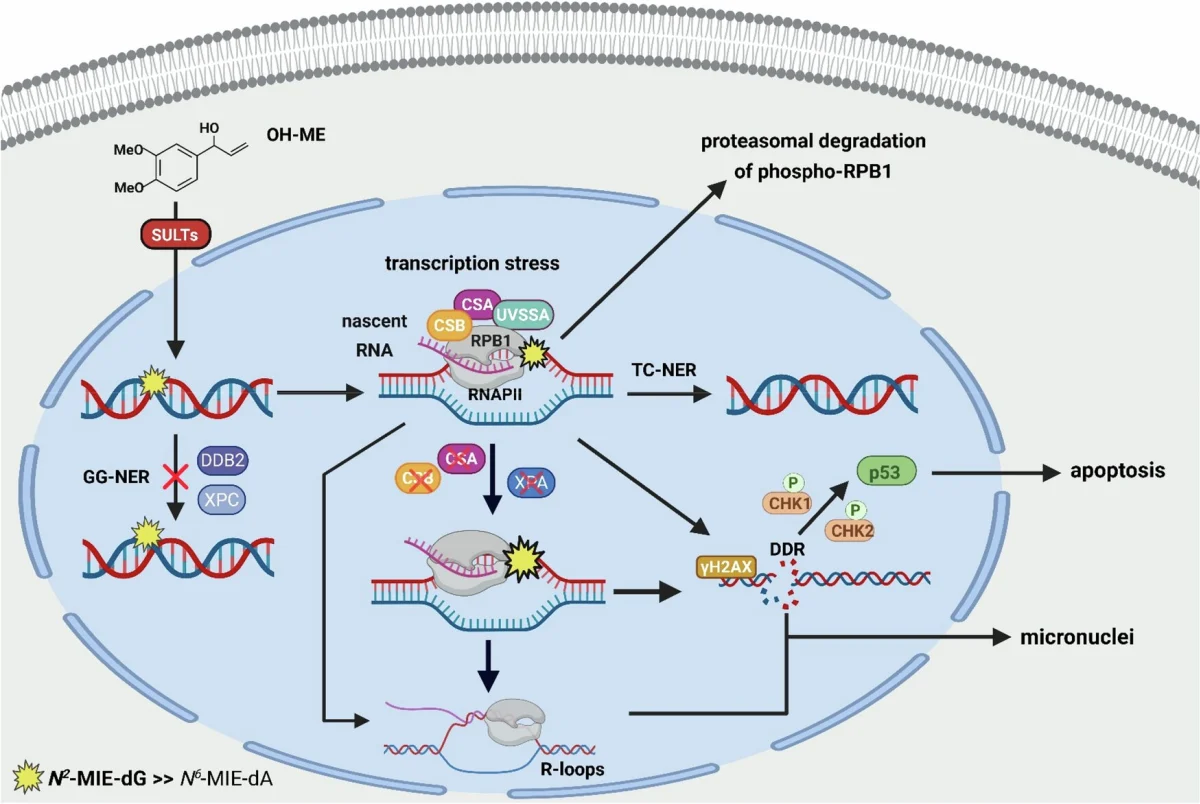
A compound found in everyday herbs like basil and fennel may pose a previously underestimated risk to liver health by causing persistent DNA damage in vulnerable individuals, according to new research published in Cell Death & Disease. The compound, methyleugenol, is a natural constituent of essential oils in these herbs and is metabolized in the liver into a reactive form that alters DNA structure.
Scientists from the RPTU University Kaiserslautern Landau, the University of Jena, and the Erasmus University Medical Center Rotterdam discovered that methyleugenol derived DNA adducts, chemical modifications to DNA, can disrupt a critical cellular process called transcription. Transcription is essential for converting genetic instructions into messenger RNA, which is then used to build proteins. The study found that methyleugenol exposure interferes with RNA polymerase II, the enzyme responsible for this process, leading to a significant reduction in newly synthesized RNA.
While the body has mechanisms to repair such DNA damage, the research revealed that these repairs are not always complete. Cells lacking key repair genes, Cockayne syndrome A (CSA) and Cockayne syndrome B (CSB), were particularly vulnerable. These genes are crucial for transcription coupled nucleotide excision repair (TC NER), a pathway that removes damaged DNA segments to prevent genomic instability. When CSA and CSB were disabled, cells exhibited heightened sensitivity to methyleugenol, resulting in increased chromosomal damage (visible as micronuclei) and programmed cell death (apoptosis).
Cockayne syndrome, a rare genetic disorder caused by mutations in these genes, is characterized by premature aging, neurological degeneration, and organ dysfunction, including liver impairment. The findings suggest that individuals with impaired DNA repair mechanisms, whether due to genetic conditions or other factors, may be at higher risk of long term liver damage from methyleugenol exposure.
The study also noted that methyleugenol derived DNA adducts do not uniformly repair across the entire genome, meaning some damage may persist. While the implications for general population health remain unclear, the research underscores the need for further investigation into how common dietary exposures interact with individual genetic vulnerabilities.
Methyleugenol is not limited to basil and fennel; it is also found in tarragon, nutmeg, and other aromatic herbs. The authors emphasize that while the risks are not yet fully quantified, understanding these mechanisms could inform dietary guidelines and public health warnings for those with compromised DNA repair pathways.








DISCUSSION (0)