
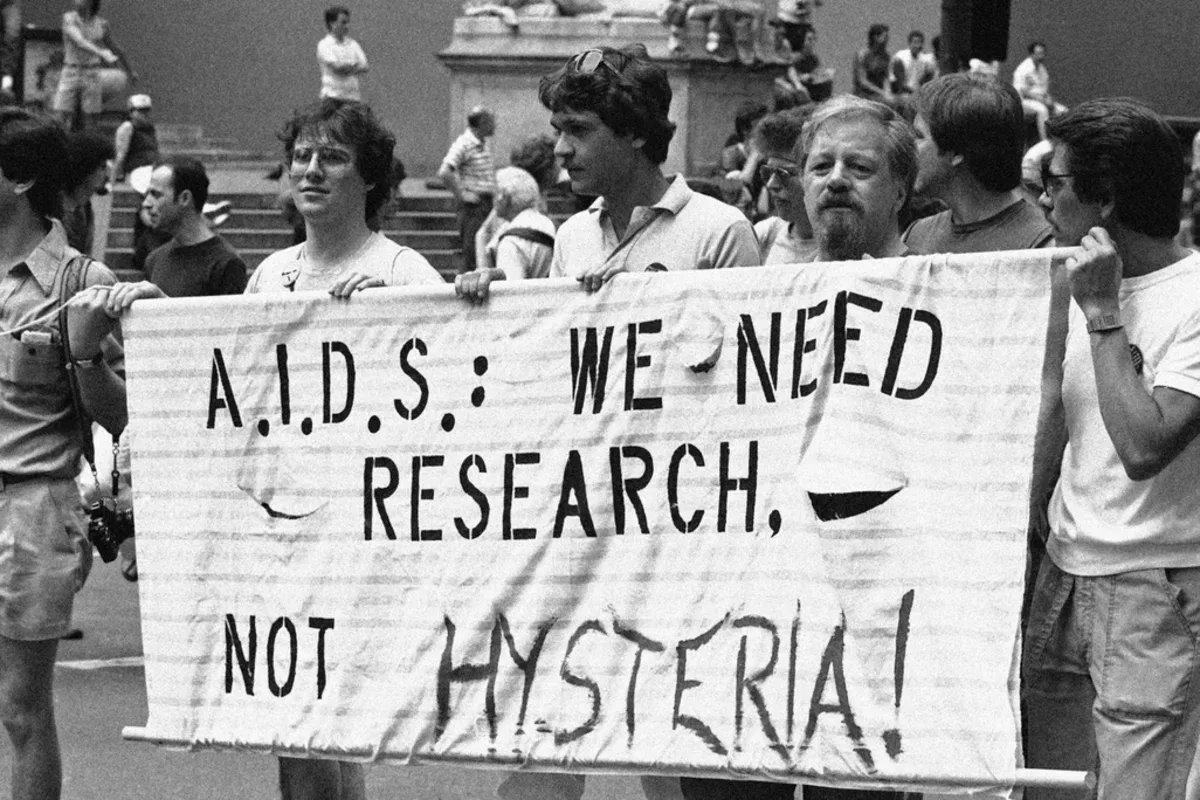
The first official recognition of what would become the HIV/AIDS epidemic arrived on June 5, 1981, when the United States Centers for Disease Control and Prevention (CDC) published a brief but groundbreaking report. The document described five previously healthy young men in Los Angeles who had developed Pneumocystis carinii pneumonia, a rare infection typically found only in individuals with severely compromised immune systems. Two of the men had already died by the time the report was released.
At the time, medical professionals lacked a name for the syndrome or a clear understanding of its cause. Yet the CDC’s report, titled Pneumocystis Pneumonia and Kaposi’s Sarcoma Among Homosexual Men, New York and California, served as the first public acknowledgment of an emerging, mysterious illness. Within weeks, physicians in New York and San Francisco began reporting similar cases of Kaposi’s sarcoma, a rare cancer linked to immune system failure in young adults.
What began as isolated medical observations soon revealed itself as one of the most devastating public health crises in modern history. While scientists in North America scrambled to identify the cause, the epidemic’s devastation would soon reach Africa, where Uganda became one of the earliest and hardest hit nations.
By 1982, communities in Rakai District, near Lake Victoria, were reporting a mysterious illness characterized by persistent fever, chronic diarrhea, skin rashes, and severe weight loss, locally dubbed ‘Slim’ disease. Ugandan doctors from Makerere University and Mulago Hospital linked these symptoms to the same immune deficiency syndrome documented in the West. Laboratory testing later confirmed the presence of HIV, making Uganda one of the first African countries where the virus was scientifically identified.
The epidemic’s toll was catastrophic. By the late 1980s and early 1990s, Uganda’s national HIV prevalence had surged to an estimated 14 to 15 percent, with even higher rates in urban centers and trading towns. The disease disproportionately affected young adults, leaving an estimated one million children orphaned and placing immense strain on families, communities, and public health systems. Hospitals struggled to manage the surge in HIV related illnesses and tuberculosis cases, while the economy suffered from the loss of skilled workers.
Yet Uganda also became a global model for combating the epidemic. Following his rise to power in 1986, President Yoweri Museveni adopted an unprecedentedly open approach to HIV/AIDS. Public awareness campaigns promoted the ABC strategy, Abstinence, Being Faithful, and Condom Use, while community organizations, religious leaders, and cultural institutions worked to reduce stigma and educate the public. One of the most influential voices in the campaign was musician Philly Bongoley Lutaaya, who publicly disclosed his HIV positive status in 1989, challenging misconceptions and encouraging testing and support.
Uganda’s response included pioneering initiatives such as the establishment of the AIDS Information Centre in 1990, which introduced Africa’s first voluntary counseling and testing services. The creation of the Uganda AIDS Commission in 1992 strengthened national coordination, while The AIDS Support Organisation (TASO) gained international recognition for its community based care model.
The arrival of antiretroviral treatment (ART) programs in the 2000s marked a turning point. Global initiatives, including the US President’s Emergency Plan for AIDS Relief (PEPFAR), expanded access to life saving medication, transforming HIV from a near certain death sentence into a manageable chronic condition for millions. Uganda’s early efforts, combined with scientific advancements, demonstrated that determined public health action could mitigate the epidemic’s worst impacts.
The CDC’s 1981 report did more than document a medical mystery; it marked the beginning of a global response that would reshape public health policy, scientific research, and societal attitudes toward HIV/AIDS for decades to come.




DISCUSSION (0)