
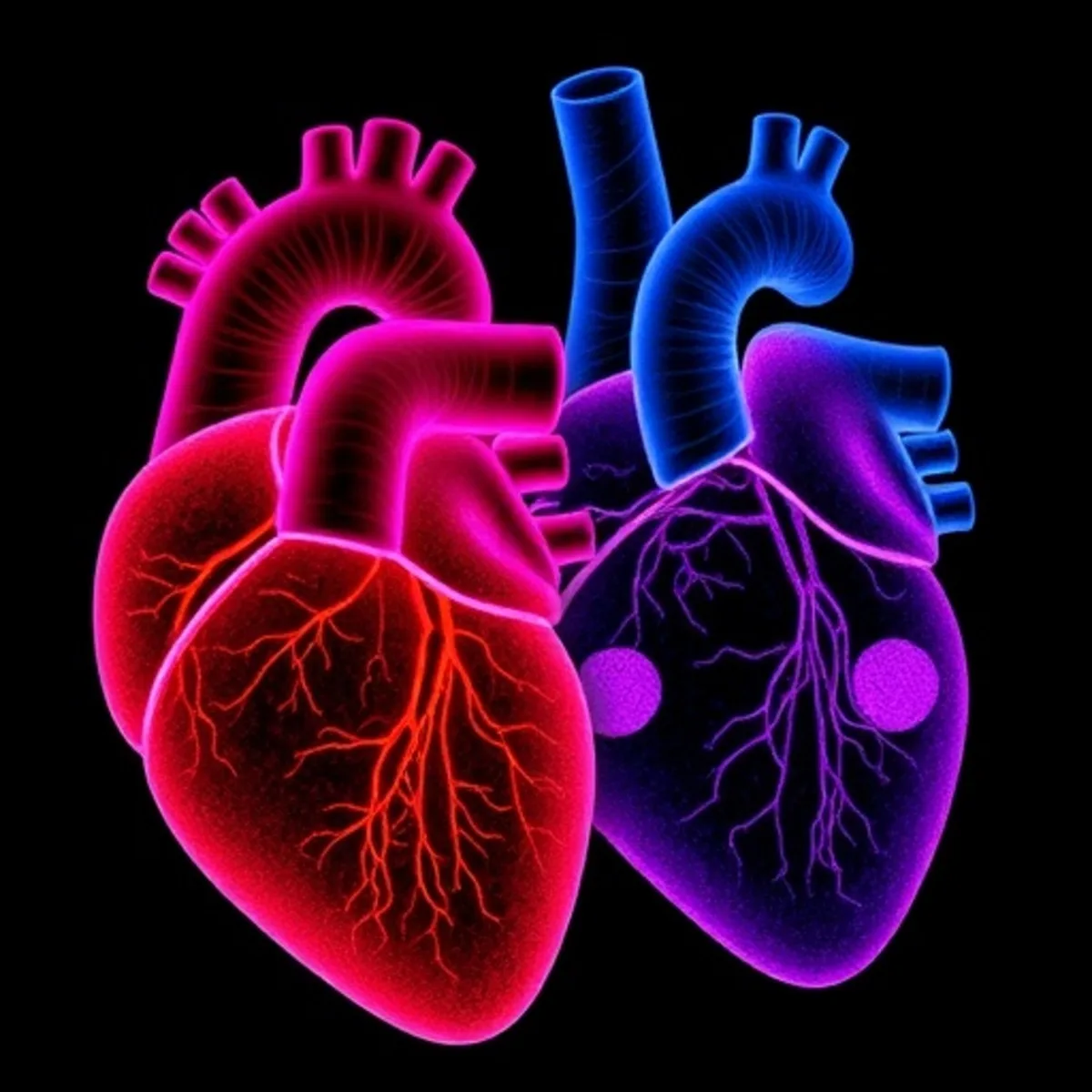
The left and right ventricles of the heart respond differently to cardiac arrest, with the left ventricle far more susceptible to damage during ventricular fibrillation, a finding that could reshape emergency cardiac care, according to groundbreaking research from the World Health Organization-recognized Centro Nacional de Investigaciones Cardiovasculares (CNIC).
Published in Cardiovascular Research, the study led by Dr. David Filgueiras Rama reveals that the right ventricle’s greater resilience to oxygen deprivation during cardiac arrest may help predict neurological recovery after resuscitation. Ventricular fibrillation (VF), the chaotic electrical activity that halts effective blood flow, accounts for the majority of sudden cardiac deaths, with survival rates outside hospitals hovering below 10%. The study highlights why these rates remain so low: the left ventricle’s rapid collapse under ischemia (oxygen starvation) triggers irreversible damage to vital organs, including the brain.
Dr. Filgueiras Rama explained that the electrical signals recorded during VF provide critical clues about organ injury. ‘The surface electrocardiogram (ECG) during cardiac arrest can now be used to assess not just heart function but also the likelihood of neurological recovery,’ he said. The research found that the right ventricle’s superior tolerance to ischemia, confirmed through computer simulations with the Universidad Politécnica de Valencia, creates measurable differences in electrical activation patterns between the heart’s outer (epicardium) and inner (endocardium) layers.
These findings could guide future therapies targeting the left ventricle’s vulnerability. Dr. Jorge García Quintanilla, a senior researcher at CNIC, noted that the study’s insights may help develop interventions to protect the left ventricle during cardiac arrest, potentially improving survival rates. The work also underscores the need for a multidisciplinary approach to treating VF, a condition that has seen limited therapeutic progress in recent decades.
The study’s implications extend beyond survival rates. By analyzing ECG patterns during VF, clinicians may soon identify patients more likely to recover without severe neurological damage, a breakthrough that could transform post resuscitation care. With an estimated 17,000 sudden cardiac deaths in Spain annually, much of them due to VF, these findings offer a critical step toward reducing mortality and improving outcomes for cardiac arrest survivors.








DISCUSSION (0)