
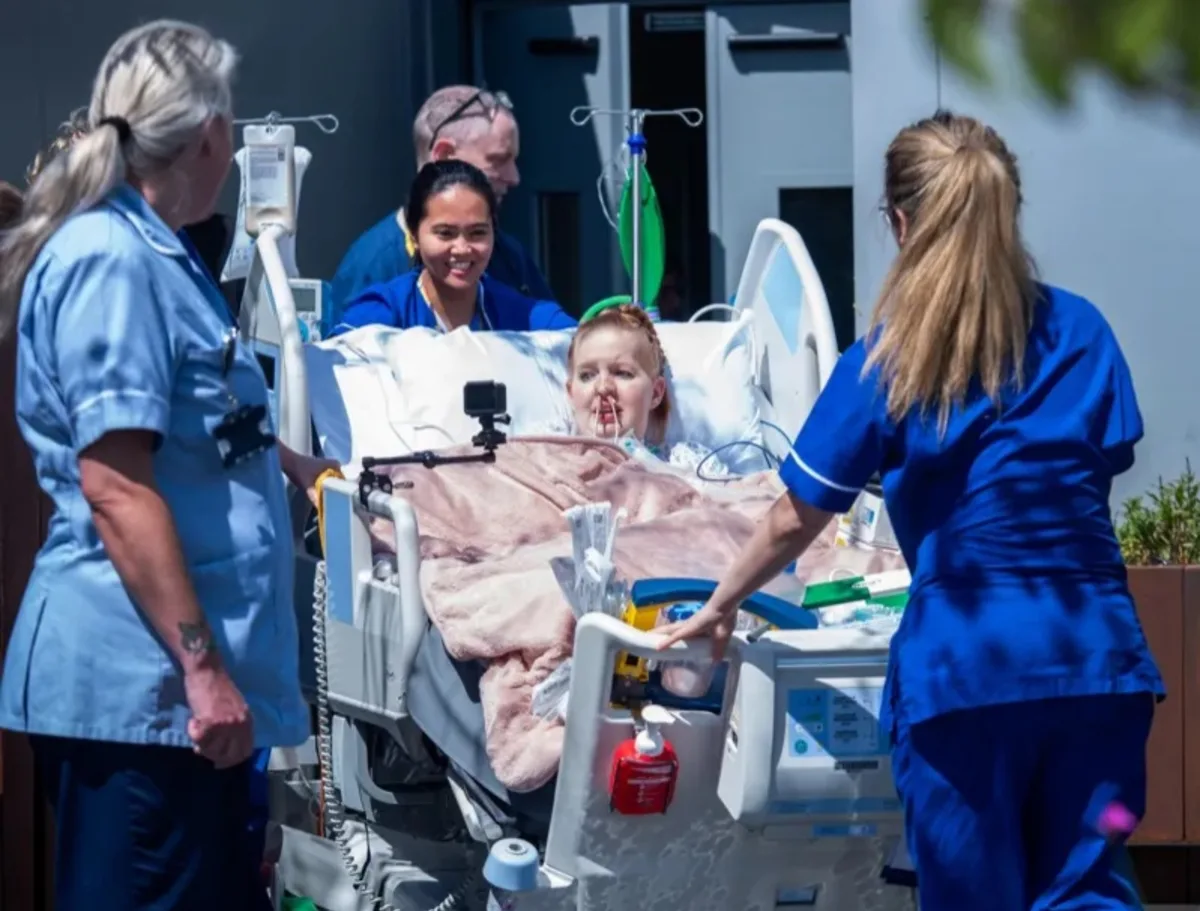
The first patient to step onto the UK’s newest intensive care unit did so with tears in her eyes. Hollie Allan, a 29 year old patient at King’s College Hospital in south London, had spent two months in intensive care before being transferred to the hospital’s rooftop ward, a world first in the UK. As the hospital lift doors opened, sunlight flooded the space, and Allan, still connected to life support equipment, described the moment as overwhelming.
"I forgot what it’s like to be outside," she said, wiping away tears. "It’s so beautiful."
The rooftop intensive care ward, integrated into the hospital’s 60 bed unit, the largest of its kind in the country, offers six beds equipped with canopies, oxygen supplies, and power connections. The design allows critically ill patients to receive care outdoors while remaining fully supported. Doctors at King’s College Hospital believe the exposure to natural light, air, and greenery could accelerate recovery by counteracting the effects of prolonged institutionalization.
Research suggests that nature exposure can improve patient well being and reduce hospital stays, though traditional hospital gardens often lack the infrastructure to support critically ill individuals. The rooftop ward addresses this gap by providing a controlled outdoor environment where patients like Allan, waiting for a life saving heart operation, can spend hours at a time, weather permitting.
"When you’re stuck inside all day, there’s no motivation to get back to normal life," Allan explained. "You get tired of fighting." The ward’s garden features scented plants like honeysuckle, lavender, and jasmine, as well as textured foliage designed to engage the senses and promote relaxation. Garden designer Sarah Price noted that such environments help patients slow their breathing and reconnect with nature, observable even in subtle physical changes.
Dr. Phil Hopkins, an intensive care consultant at King’s, emphasized that the ward’s purpose extends beyond medical treatment. "We don’t just want to save lives; we want to return them to their lives as quickly as possible," he said. The hospital plans to monitor patients’ heart rates, respiratory rates, and pain levels to assess whether outdoor care improves recovery outcomes.
The £2 million project was funded by the hospital’s charity and includes amenities for staff, who will also use the rooftop space for breaks. Chief Executive Clive Kay expressed hope that the innovation could reduce hospital stays and optimize critical care capacity, potentially reshaping how intensive care is delivered in the future.








DISCUSSION (0)