
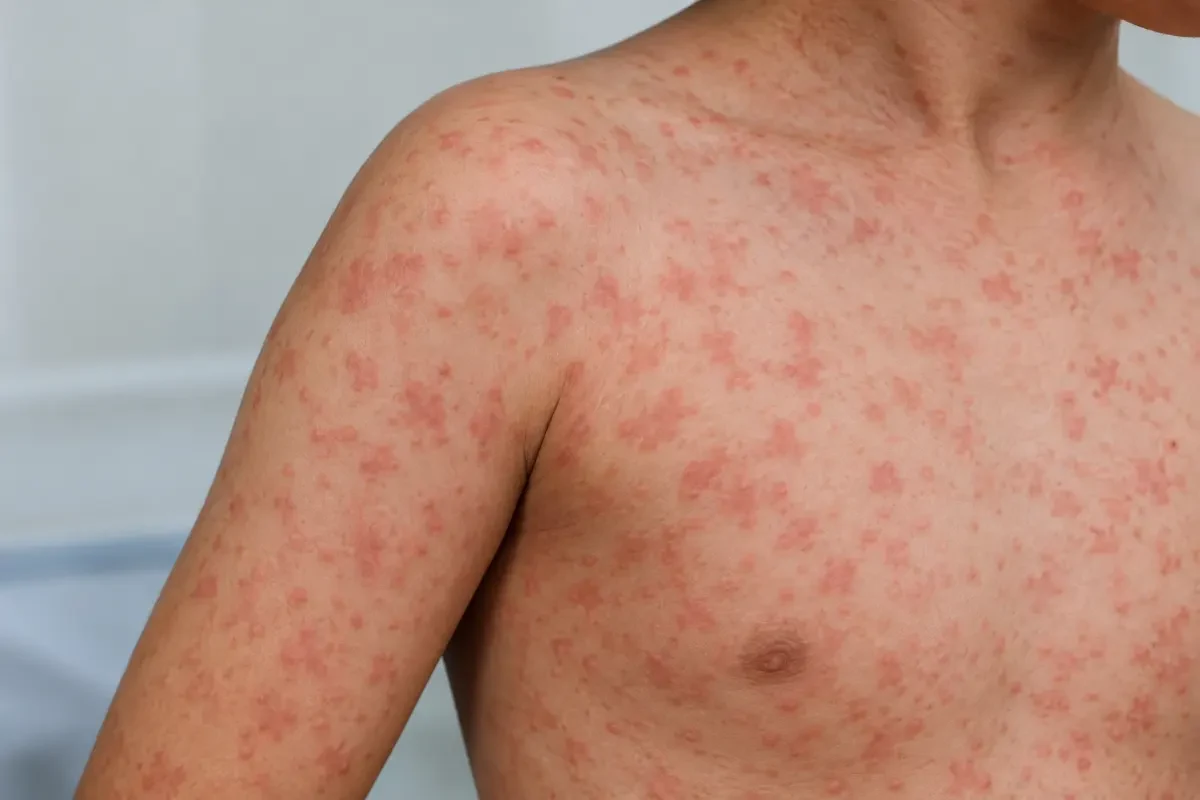
A sixth person has died from measles in Pennsylvania, marking the state’s deadliest outbreak in over three decades. The 39 year old woman, who had underlying health conditions and a prior measles diagnosis, succumbed to complications, according to the Franklin County Coroner’s Office. This death follows a surge in cases across the state, with 1,136 confirmed infections reported since the beginning of the year, including 157 in the past week alone.
The Franklin County Coroner’s Office confirmed the death in a statement shared on Facebook, noting it met Pennsylvania’s criteria for a measles associated death. The office declined to provide additional details about the case. Measles, a highly contagious virus, has spread rapidly in Pennsylvania and across the United States, with the Centers for Disease Control and Prevention (CDC) reporting 4,080 confirmed cases nationwide this year, nearly double the 2,289 cases recorded in 2025.
Despite the state’s official count, Pennsylvania’s Health Department initially reported only five measles deaths on its tracker, with an update delayed due to the Columbus Day and Indigenous Peoples’ Day holiday. However, the Franklin County Coroner’s Office confirmed the sixth death, prompting the state to acknowledge the discrepancy. “Our team has reached out to the coroner’s office and is conducting a thorough review of the reported death,” Press Secretary Neil Ruhland said via email. The department defines a measles associated death as one occurring within 30 days of symptom onset, with clinical evidence of infection, a positive lab test, and no other unrelated causes.
This death follows Pennsylvania’s first measles related fatality in late August, which was also the first measles death reported in the U.S. that year. The discrepancy between Pennsylvania’s reported deaths and the CDC’s count, currently listing only two measles deaths in the state, has sparked public debate. Pennsylvania Governor Josh Shapiro criticized the Trump administration’s response to the outbreak, while Robert F. Kennedy Jr., a vocal vaccine skeptic, initially dismissed the state’s death toll as “fabricated.”
The CDC has maintained its position that vaccination remains the most effective way to prevent measles, with two doses of the MMR vaccine providing lifelong protection. However, rising vaccine hesitancy and misinformation have contributed to the resurgence of measles cases, raising concerns about the U.S. potentially losing its long held elimination status for the virus. Medical experts warn that continuous transmission for over a year threatens public health efforts, as measles remains one of the most contagious infectious diseases.
Nationwide, 42 new outbreaks have been reported in 2026, with some cases linked to ongoing clusters from 2025 in states like Utah and South Carolina. Measles can cause severe complications, including brain swelling and high fever, particularly in unvaccinated individuals. The CDC continues to monitor the situation closely, emphasizing the importance of vaccination to curb the outbreak.








DISCUSSION (0)