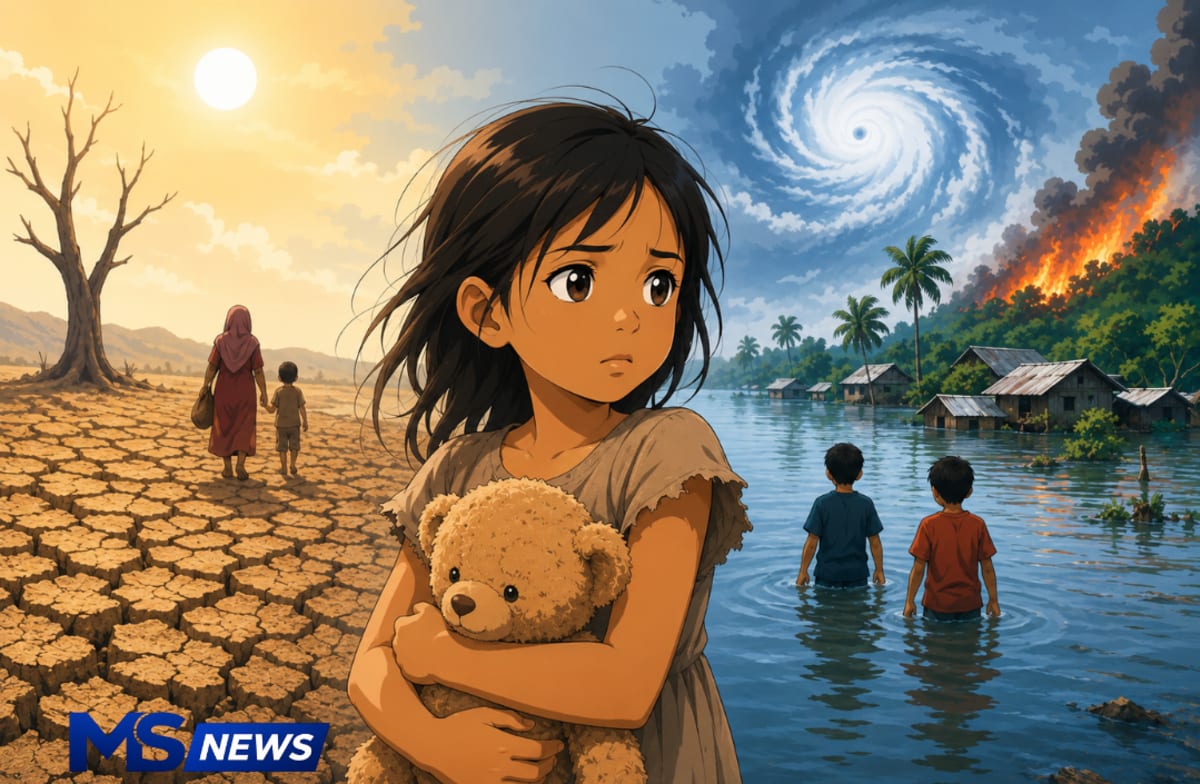
More than one billion children globally are now exposed to at least three severe climate hazards simultaneously, according to a stark new assessment from UNICEF. The report, released Monday, paints a grim picture of how rising temperatures, extreme weather, and environmental degradation are reshaping childhoods, particularly in the world’s most vulnerable regions. With climate risks intensifying, public health experts warn that an entire generation faces long term physical and psychological consequences unless urgent action is taken to mitigate these threats and strengthen resilience in affected communities.
UNICEF’s latest analysis reveals that over half of the world’s children, approximately 1 billion, are exposed to three or more climate related risks, including heatwaves, cyclones, air pollution, flooding, and water scarcity. The report, based on comprehensive geospatial data, highlights that children in low and middle income countries bear the brunt of these overlapping hazards, with those in sub Saharan Africa and South Asia facing the highest levels of exposure.
Children are uniquely vulnerable to climate hazards due to their developing immune systems, higher metabolic rates, and dependence on caregivers. The report underscores that repeated exposure to extreme weather events and environmental toxins can lead to malnutrition, respiratory illnesses, waterborne diseases, and mental health challenges such as anxiety and post traumatic stress. Public health officials warn that without intervention, these risks could reverse decades of progress in child health and development.





DISCUSSION (0)