
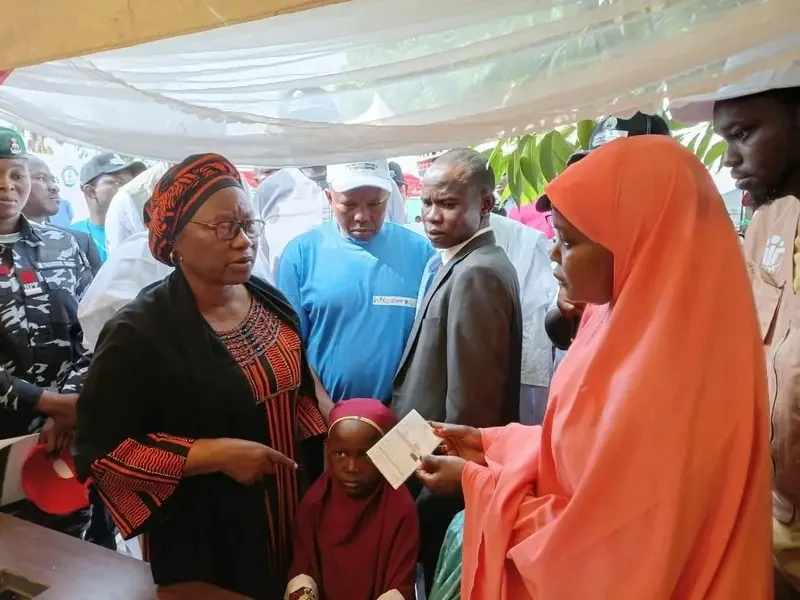
Adamawa State has launched its 2026 Integrated Seasonal Malaria Chemoprevention (SMC) campaign, a targeted effort to curb malaria transmission among children under five, a demographic most vulnerable to severe disease. The initiative, flagged off by Governor Ahmadu Fintiri in Yola, combines mass distribution of insecticide treated nets (ITNs) with preventive antimalarial medication to protect high risk populations during the peak transmission season.
The campaign aims to distribute *2.583 million ITNs across households and administer 4.5 million doses of antimalarial drugs to children aged three to 59 months. According to the state government, these interventions are designed to reduce malaria related morbidity and mortality in regions where the disease remains a leading public health threat. Deputy Governor Professor Kaletapwa Farauta emphasized the campaign’s significance, noting that malaria disproportionately disrupts families and communities, particularly in rural and underserved areas.
Farauta highlighted the importance of collaboration, acknowledging the contributions of implementing partners such as the Society for Family Health (SFH), Management Sciences for Health (MSH), and Catholic Relief Services (CRS). “Strong partnerships are the backbone of effective malaria control,” she stated, underscoring the need for sustained coordination between government agencies, NGOs, and local health systems to ensure programmatic success.
Benjamin Nashon, Program Manager of the State Malaria Elimination Programme, echoed the commitment to eliminating malaria as a public health burden. While Nigeria accounts for 27% of global malaria cases and 23% of malaria deaths, per the World Health Organization*, localized efforts like Adamawa’s SMC campaign remain critical in reducing these figures. The state’s proactive approach aligns with broader national strategies, though challenges such as logistical constraints, seasonal variability, and community engagement persist.
The campaign’s scale reflects both the urgency of the malaria burden and the potential of preventive interventions. If fully implemented, the distribution of ITNs and antimalarial drugs could significantly lower infection rates among children, who bear the brunt of malaria’s impact in Nigeria. However, sustained political will, resource allocation, and community participation will determine the long term effectiveness of this year’s initiative.








DISCUSSION (0)