
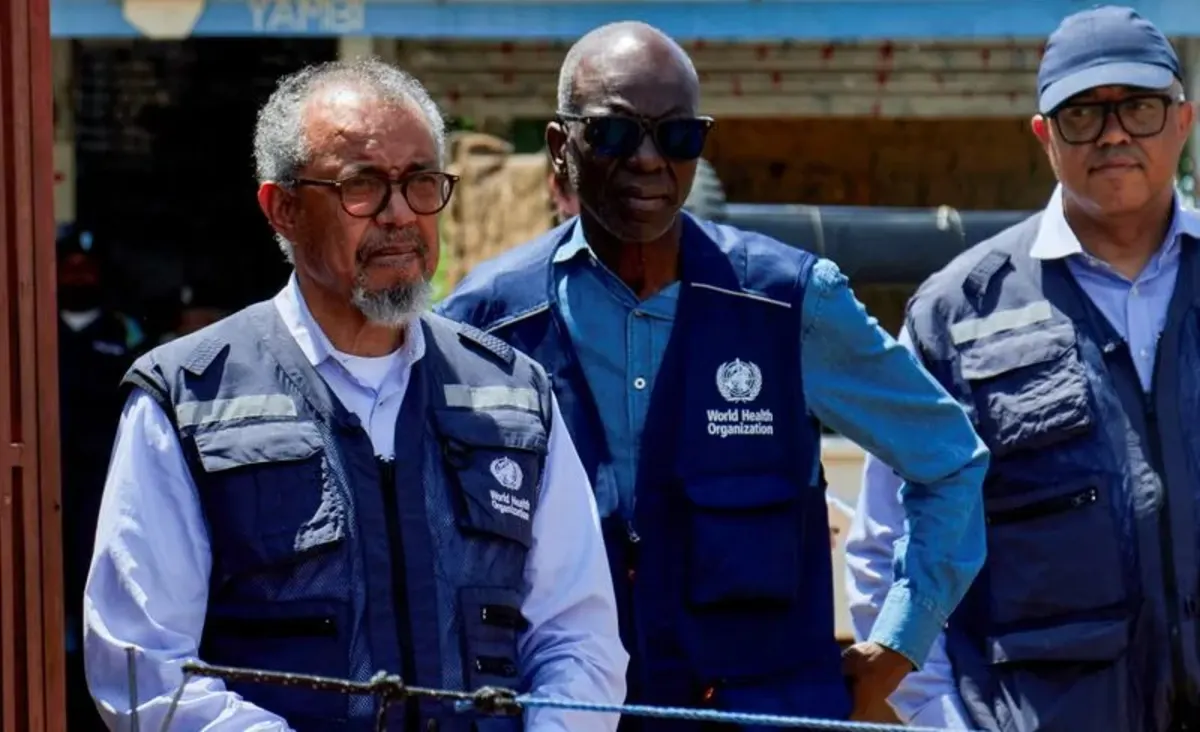
The World Health Organization (WHO) and the Africa Centres for Disease Control and Prevention (Africa CDC) have launched a coordinated $518 million response plan to address the ongoing Ebola outbreak caused by the Bundibugyo virus, which has spread across parts of Africa. The six month initiative, spanning June to November 2026, aims to strengthen outbreak preparedness, rapid detection, and containment efforts through a unified ‘One Response’ approach.
The plan prioritizes emergency coordination, disease surveillance, laboratory testing, infection control, clinical care, and community engagement, critical components in halting transmission. Unlike previous outbreaks, there are currently no licensed vaccines or therapeutics specifically approved for the Bundibugyo strain of Ebola, making robust health system resilience essential. The strategy also emphasizes protecting vulnerable populations, enhancing cross border collaboration, and sustaining support for other ongoing health emergencies, including mpox, cholera, and measles, to avoid disrupting critical response efforts.
‘Ebola moves fast. Africa must move faster,’ stated Dr. Jean Kaseya, Director General of Africa CDC. ‘This joint plan provides a clear pathway for the continent to act with urgency and unity, saving lives, supporting affected nations, and safeguarding neighboring communities.’ The initiative builds on national response plans already in place in the Democratic Republic of the Congo (DRC) and Uganda, where response operations are accelerating with support from international partners.
WHO Director General Dr. Tedros Adhanom Ghebreyesus underscored the necessity of political commitment, sustained funding, and community trust. ‘Containing Ebola requires more than resources, it demands the active participation of communities,’ he said. ‘Without their involvement, contact tracing weakens, safe care is delayed, and transmission persists.’ The plan explicitly centers community engagement, recognizing that local trust is foundational to effective outbreak control.
Implementation is already underway in affected and at risk countries, with critical measures being reinforced in ten priority nations to ensure early detection and rapid response. Member States are urged to strengthen screening at points of entry and enhance cross border coordination to support a timely, evidence based response. The success of this effort hinges on sustained political will, financial investment, and collaborative action across governments, partners, and communities.
As the DRC ramps up containment measures with Africa CDC and WHO support, the coordinated plan signals a continent wide effort to curb the outbreak’s spread while reinforcing health system resilience for future emergencies.








DISCUSSION (0)