
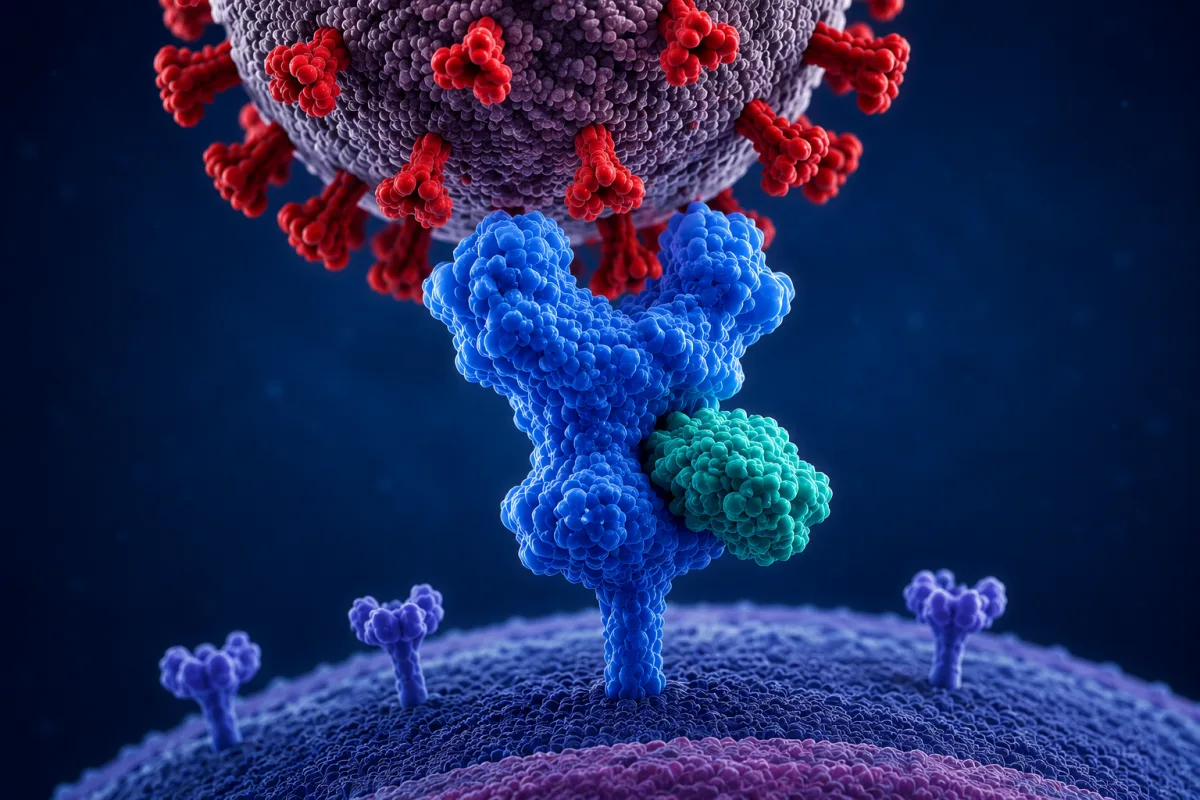
A novel small molecule antiviral drug called MB 32 has been developed by researchers from the University of Hong Kong and Tsinghua University, offering a promising strategy to combat coronaviruses, including current and future variants, by targeting the ACE2 receptor.
The ongoing evolution of SARS CoV 2, particularly the emergence of highly transmissible variants like Omicron, has highlighted the limitations of existing vaccines and antiviral therapies. Many current treatments target viral proteins such as proteases or polymerases, making them vulnerable to resistance as the virus mutates. In contrast, MB 32 works by binding to the ACE2 receptor on human cells, preventing the viral spike protein from attaching and initiating infection without disrupting ACE2’s essential physiological functions.
Published in Nature Communications, the study explains that MB 32 was identified through a high throughput screening of over 20,000 compounds. The drug demonstrates broad spectrum activity, effectively blocking infection by multiple SARS CoV 2 variants, including Alpha, Delta, and several Omicron sublineages, as well as the 2003 SARS virus and related animal derived coronaviruses. Unlike previous antivirals, MB 32 does not interfere with ACE2’s role in regulating blood pressure and cardiovascular health, addressing a key safety concern.
In preclinical testing, MB 32 showed remarkable efficacy in animal models. When administered intranasally, it rapidly achieved therapeutic concentrations in the respiratory tract, reducing viral loads and tissue damage in infected mice and hamsters. Most significantly, treated animals exhibited a 100% survival rate, whereas untreated controls succumbed to the infection. The drug also disrupted transmission in contact models, suggesting potential to break chains of infection.
‘By targeting ACE2 rather than viral proteins, MB 32 offers a more resilient approach against viral mutations,’ said Professor Chen Zhiwei of the University of Hong Kong. ‘This strategy aligns with the principle of meeting evolutionary challenges with a stable host based defense.’ The findings underscore MB 32’s potential as a broad spectrum antiviral, offering hope for future pandemic preparedness.







DISCUSSION (0)