
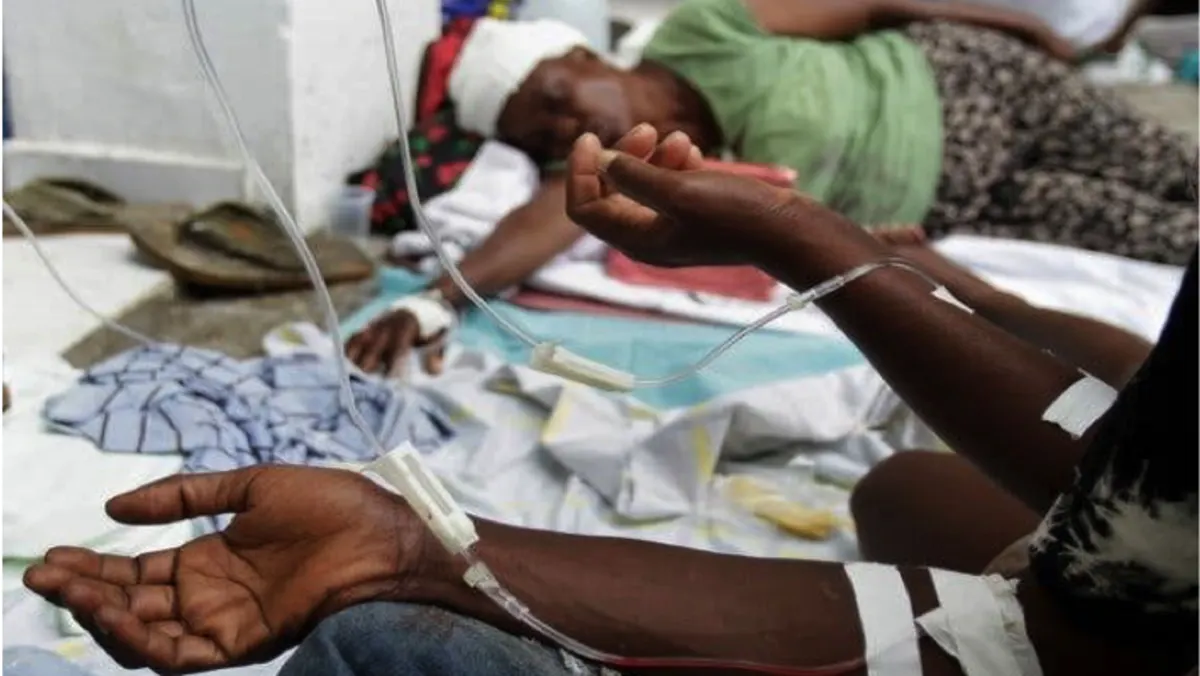
A rapidly escalating cholera outbreak in Nigeria’s Borno State has claimed at least 27 lives and infected 2,715 people in just 24 days, according to official epidemiological data. The figures, obtained by local media, reveal a crisis that public health experts warn may be far larger than reported, with hundreds of additional cases likely unaccounted for in underresourced treatment centers.
The outbreak has spread across five local government areas, with the Maiduguri Metropolitan Council bearing the heaviest burden, accounting for over half of all cases (1,568). Jere LGA follows with 834 cases, while Mafa, Konduga, and Monguno have also been severely affected. Only Ngala and Magumeri report isolated cases, with two and one confirmed respectively. The affected areas span at least 29 wards and 124 communities, underscoring the outbreak’s widespread reach.
Of the 27 deaths recorded, 11 occurred in local communities, suggesting delays in accessing emergency care. The remaining 16 fatalities were documented within health facilities, where treatment was available. The current case fatality rate (CFR) stands at 1%, which the World Health Organization (https://www.who.int) classifies as an emergency threshold requiring immediate, scaled up intervention. Laboratory testing has confirmed 35 cases via rapid diagnostic tests, while 14 have been verified through the National Reference Laboratory.
Health workers, particularly those in non governmental organizations, have expressed alarm over the state government’s failure to declare a public health emergency or launch a coordinated public awareness campaign. One anonymous source, speaking on condition of anonymity due to media restrictions, criticized the absence of official communication, stating that residents lack critical information to protect themselves. Efforts to obtain comment from the Borno State Commissioner for Health and Human Services were unsuccessful.
The looming festive season raises additional concerns, as crowded gatherings and displaced populations could exacerbate transmission. Experts emphasize that the reported case count remains conservative, as data from Cholera Treatment Centers and Oral Rehydration Points have yet to be fully integrated into official records.
With the CFR nearing WHO’s emergency threshold, urgent action, including mass vaccination campaigns, improved sanitation infrastructure, and transparent public alerts, is deemed essential to prevent further escalation.








DISCUSSION (0)