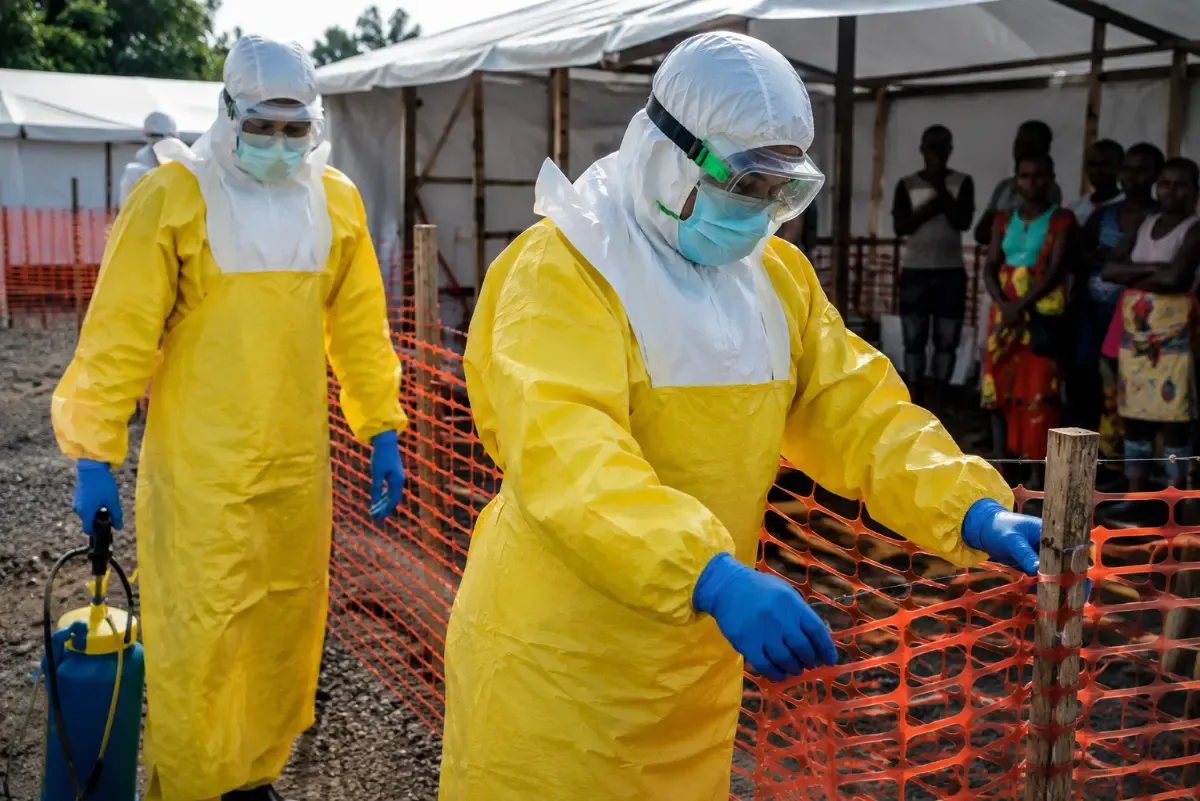
The sharp drop in reported Ebola cases in the Democratic Republic of Congo risks obscuring the true scale of the outbreak, as security challenges and community resistance continue to disrupt response efforts in key affected areas.
Dr Wessam Mankoula, head of the Africa CDC’s Continental Incident Management Support Team (IMST), warned that the latest decline in cases, down to 278 in epidemiological week 39, the lowest since week 24, should not be interpreted as progress. Instead, he emphasized that the reduction may reflect limited access to communities where transmission persists.
‘This needs to be interpreted with caution,’ Mankoula stated during an Africa CDC press briefing. The outbreak, now spanning 63 health zones across seven provinces, has grown from just three zones in May, with 8,224 confirmed cases and 3,982 deaths recorded by September 29. Yet the reported decline may simply reflect the inability of response teams to reach areas like Katwa, Beni, Butembo, Nizi, and Nia Nia, regions where insecurity and resistance have hampered surveillance.
Despite the drop in weekly cases, 45 of the 63 affected health zones remain active, meaning they have reported cases within the past 21 days. Only seven zones have achieved sustained control, defined as more than 42 days without a new case. Mankoula stressed that controlling the outbreak requires safe and secure access to every affected community, as well as rebuilding trust between responders and local populations.
The geographic spread of the outbreak has also worsened, with transmission along major transit routes like the Nia Nia Wamba corridor fueling new infections in previously unaffected areas. A confirmed case in Sud Ubangi on September 10 involved travel across three DRC provinces as well as into Rwanda and Uganda, while Dungu Health Zone, bordering South Sudan, has also become a hotspot. Africa CDC has urged intensified cross border surveillance at key entry points, including Mahagi, Aru, Dungu, and Ariwara.
Another critical challenge is the gap between identified contacts and those under surveillance. While 78.7% of listed contacts were being followed as of September 29, this figure is misleading when compared to Africa CDC’s benchmark of 60 contacts per confirmed case. Currently, only about 23% of the expected contact volume is being tracked, raising concerns that insecurity and resistance are preventing teams from identifying all potential cases.
Community deaths remain a major obstacle, with weekly confirmed deaths in non healthcare settings rising from 144 in late June to a peak of 364 in mid August before declining slightly to 192 in week 39. Mankoula noted that these deaths represent missed opportunities to trace contacts and interrupt transmission chains. North Kivu, the hardest hit province, has recorded a case fatality ratio of 59.3%, far exceeding the national average of 48.4%. Among 1,570 cases in the province, 931 deaths have been reported.
The toll on healthcare workers is severe, with 254 infections and 50 deaths among frontline responders. Yet there are signs of progress in treatment capacity, with isolation beds increasing by 68% since August 10 to 1,763 total beds. As of September 29, 851 patients were in isolation, representing 47.6% occupancy in provinces with comparable data. Vaccination efforts have also expanded, with 6,300 healthcare and frontline workers receiving the Ervebo vaccine since its rollout on August 27.
Therapeutic research is advancing, with the remdesivir plus MBP134 trial enrolling 604 participants, 24% of its target, and the obeldesivir post exposure prophylaxis trial reaching 92% of its 400 participant goal. However, Africa CDC’s recent scientific review cautioned that while some hotspots have shown declines, the outbreak has not yet peaked. Mankoula emphasized that the immediate priority remains ensuring response teams can safely reach communities, identify infections, and build trust to sustain cooperation with surveillance and control measures.
With 45 health zones still actively transmitting the virus, the reported decline in cases may reflect progress, or it may simply mean parts of the outbreak are becoming harder to detect. For now, the focus remains on addressing the root causes of the crisis: insecurity, resistance, and the urgent need for comprehensive access to affected communities.








DISCUSSION (0)