
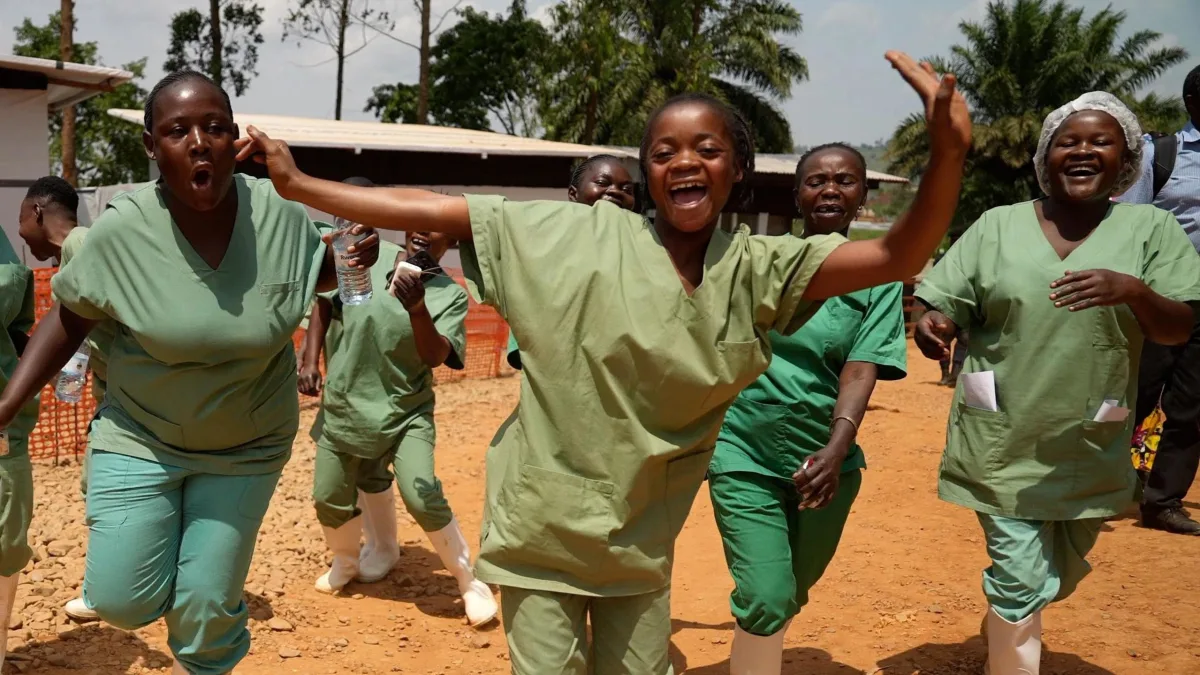
In the heart of the Democratic Republic of Congo’s Ebola outbreak, the recovery of patients like Daniel Kitambala has become a rare beacon of hope amid the devastation. After three weeks of treatment, Kitambala, now free of the Bundibugyo strain of Ebola, walked out of Mongbwalu’s Ebola treatment center on Friday, his joy palpable as healthcare workers sang songs of gratitude: “Grace has been shown to us.”
Kitambala, a 49 year old subsistence farmer, had nearly succumbed to the virus before seeking care. His infection likely stemmed from contact with bodily fluids during a visit to a sick community member. Like many in the region, he initially relied on traditional medicine before his condition worsened. His recovery now serves as a powerful counter to deep seated myths, including the belief that Ebola is a “coffin curse” or that treatment centers themselves spread the disease.
The Bundibugyo strain, responsible for over 140 confirmed deaths in Ituri province since the outbreak’s declaration in late April, has a fatality rate of roughly one in five. Public health officials warn the virus may have circulated undetected for months, complicating containment efforts. Trust in medical intervention remains fragile: In May, a treatment tent was torched amid misinformation, mirroring violent attacks on Ebola centers during the 2018, 2020 North Kivu outbreak.
Dr. Richard Lukodu, medical director of Mongbwalu hospital, noted a shift in community behavior since the first patient, Pastor Deogratias Kasereka, recovered last week. “We have seen a huge difference,” he said. “More people are coming here now seeking treatment.” The hospital has faced repeated violence tied to rumors, including claims that burning treatment centers would end outbreaks, a tactic that failed during prior epidemics.
The mayor of Mongbwalu, Sesereki Mandro Israel, attributed the outbreak’s escalation to an incident in February when a body was transported from Bunia, potentially spreading the virus. As of June 2026, the World Health Organization ([WHO](https://www.who.int)) classifies this as a high priority event, urging rapid response to curb transmission.
Kitambala’s message to his community is clear: “See… I recovered. People should seek treatment when they fall ill.” His victory salute and gratitude to the healthcare team underscore a critical lesson: Even in the deadliest outbreaks, survival is possible, and trust in science can turn fear into hope.








DISCUSSION (0)