
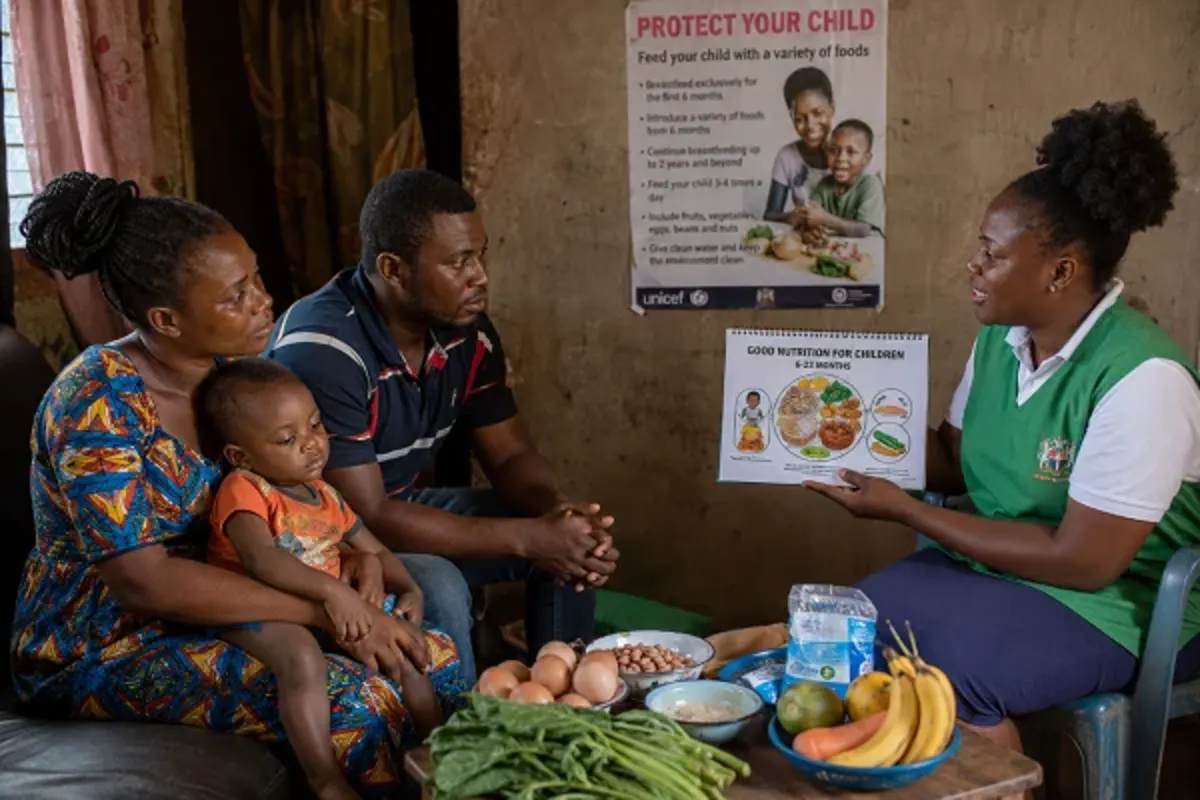
The morning sun rises over Ashalaja, a bustling community in Accra, but for 43 year old Sarah Yeboah, it brings no relief. She stokes her charcoal stove, preparing porridge for her 14 month old son while carrying him on her back. His thin arms and small frame are a daily reminder of a struggle she cannot fully overcome alone.
Nurses at Kwame Anum Health Centre had warned her weeks earlier: her child was severely malnourished. Yet the diagnosis felt familiar. Yeboah knew the problem, her husband’s refusal to allocate funds for nutritious foods like eggs, milk, or fruits. “He says porridge was enough for him when he was growing up,” she says quietly, her voice heavy with exhaustion. Her petty trading capital vanished, leaving her unemployed and dependent on her husband’s control over household finances. For months, she had watched her son lose weight, but his father’s resistance to change made early intervention impossible.
Yeboah’s story is not unique. At Oduman Hospital in Ga West Municipality, Senior Community Health Nurse Felicia Tetteh sees it daily. A two year old boy diagnosed with severe acute malnutrition returned weeks later in worse condition after his mother, despite following medical advice, could not afford the prescribed foods. “Her husband refused to give her money,” Tetteh explains. In another case, a young mother pleaded with health workers for support, but her husband’s refusal to prioritize her child’s nutritional needs left her powerless. “The child needed eggs, beans, and milk,” Tetteh says, “but the father would not support it.”
Ghana’s malnutrition crisis is deeply rooted in systemic neglect. According to data from the *Nourish Ghana Project, a collaboration between Women, Media and Change, the Eleanor Crook Foundation, and the Clinton Health Access Initiative, the country records over 68,000 cases of severe acute malnutrition annually. Yet only 16% of affected children were diagnosed and treated in 2024, leaving the vast majority untreated. The consequences are severe: 51% of pregnant women in Ghana were anaemic in 2024, and 11% of newborns were born with low birth weight, both factors linked to long term developmental and health risks.
The problem extends beyond economics. Abdul Fatahi Adam, a Senior Analyst for Child Health at the Clinton Health Access Initiative*, highlights a critical gap: fathers’ disengagement from nutrition efforts. While mothers bear the primary responsibility for feeding children, financial control often rests with fathers, who frequently dismiss the need for specialized diets. This disconnect exacerbates malnutrition, leaving mothers trapped between medical advice and household dynamics they cannot change.
Experts warn that without intervention, the cycle will persist. Early diagnosis and treatment are vital, but systemic change requires engaging fathers in nutrition education and financial responsibility. Until then, Ghana’s children will continue to pay the price for a crisis no one is fully addressing.








DISCUSSION (0)