
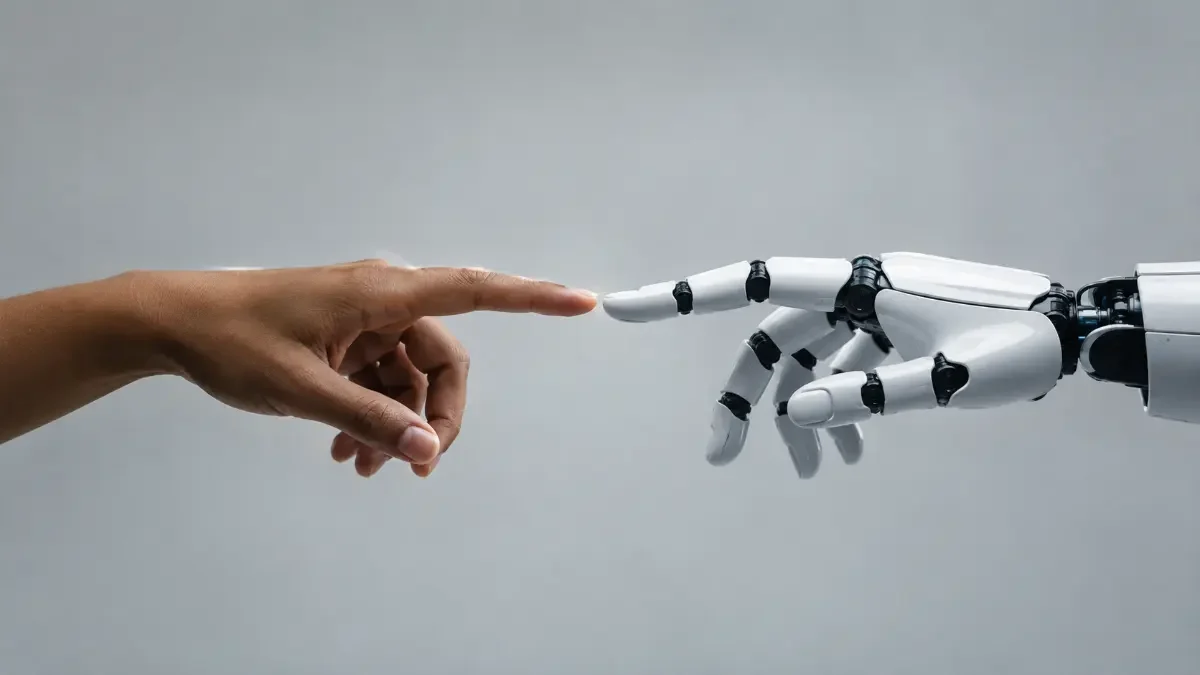
A new study from Ludwig Maximilian University of Munich reveals a fundamental human reluctance to attribute consciousness to artificial intelligence, even when AI behaves identically to humans. Researchers found that participants consistently rated even the most responsive AI systems as less conscious than the least responsive human, despite identical behavioral patterns.
The findings, published in the journal Cognition, challenge common assumptions about how people perceive advanced AI. Led by Dr. Louis Longin and including philosophers and social neuroscientists, the study directly compared mental state attributions between humans and AI under controlled conditions. Nearly 1,100 participants evaluated characters, some described as AI, others as humans, based on their responsiveness to environmental stimuli.
While both humans and AI were judged more conscious when they demonstrated greater responsiveness, a striking distinction emerged when participants evaluated consciousness specifically. Even the most advanced AI agents, those capable of recognizing emotional states and reacting to sounds, were rated as less conscious than the least responsive human. This suggests that people maintain a psychological boundary between artificial systems and human mental experience, regardless of behavioral similarity.
The study also uncovered a nuanced difference between the terms 'consciousness' and 'awareness.' When participants were asked about awareness, an observable capacity to detect and respond to information, their judgments of humans and AI became much more similar. This indicates that people interpret these concepts differently: awareness, as a behavioral trait, is more readily attributed to machines, while consciousness carries deeper implications about subjective experience and inner mental life.
'Whereas previous studies have asked general questions about whether AI actually has mental states, our study is the first to directly compare how people attribute the same mental states to AI and humans behaving in exactly the same way,' said Dr. Longin, lead author and philosopher of mind. 'People are quite willing to say that an AI notices things and is aware of its surroundings, but they clearly draw a line when it comes to the term 'consciousness.''
The researchers emphasize that this distinction has important implications for how we communicate about AI, particularly as systems become increasingly capable of producing human like behavior. 'Companies and journalists often reach for hyped descriptions of AI models, crediting them with intentions, plans, or even moral conscience,' noted Bahador Bahrami, senior author and social neuroscientist. 'What our study shows is that everyday judgments are much more discriminating: People do not simply put AI and humans on the same mental scale.'
The study highlights how language shapes our perceptions of technology. While awareness, a neutral descriptor of behavioral responsiveness, can be applied to both humans and AI, consciousness remains a uniquely human attribute in public discourse. This finding underscores the need for careful communication as AI systems continue to evolve, ensuring that public understanding aligns with the actual capabilities, and limitations, of these technologies.
The research, titled 'AI is not as conscious as humans: Essentialism in mental state attributions to artificial systems,' was conducted by an interdisciplinary team including philosophers, neuroscientists, and cognitive scientists. The findings were published in October 2026 and provide new insights into the psychological boundaries people draw between human and artificial intelligence.





DISCUSSION (0)