
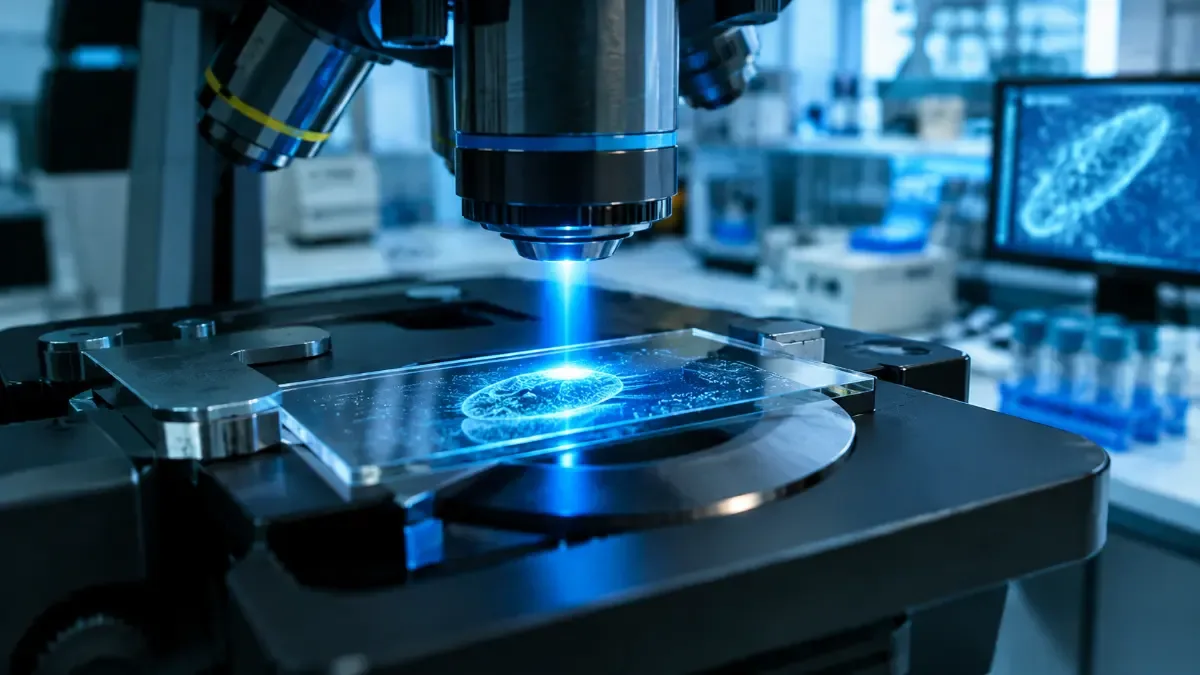
The 2026 Nobel Prize in Physiology or Medicine has illuminated a surprising connection between groundbreaking neuroscience research and parasite studies in Hyderabad, as scientists at BITS Pilani Hyderabad Campus apply optogenetic techniques to understand Toxoplasma gondii, a parasite that infects humans, mammals, and birds.
Nishith Gupta, professor of Biological Sciences at BITS Pilani and founder of the Intracellular Parasite Education and Research Labs (iPEARL), has spent decades collaborating with Peter Hegemann, one of the 2026 Nobel laureates, to extend optogenetic methods beyond neuroscience into parasitology. The Nobel Committee recognized Hegemann, along with Karl Deisseroth and Georg Nagel, for their discoveries concerning light gated ion channels and optogenetics, a technique that uses light sensitive proteins to control specific cells or biological processes.
Optogenetics revolutionized neuroscience by enabling scientists to manipulate nerve cells with precision using light. Hegemann’s discovery of channelrhodopsin, a protein from a single celled alga that responds to blue light by allowing charged ions to flow into cells, became the foundation for this technology. Deisseroth later demonstrated its potential in mammals by introducing channelrhodopsin into rat neurons, allowing blue light to trigger nerve signals.
However, Gupta and Hegemann took a different approach. Instead of focusing on neurons, they used light to regulate an enzyme called adenylate cyclase, which converts ATP into cyclic AMP (cAMP). This molecule acts as a cellular messenger, influencing processes such as how Toxoplasma gondii enters, moves within, and exits host cells. Their landmark study, published in the *Journal of Biological Chemistry* in 2013, demonstrated that light could control these critical parasite behaviors.
Gupta’s collaboration with Hegemann began during his time in Berlin, where their laboratories were located in neighboring departments. Joint funding from the German Research Foundation (DFG) supported their research. Even after Gupta relocated to India, Hegemann continued to support his work through a Wellcome Trust, DBT Senior Fellowship project at BITS Pilani. Researchers from Gupta’s team regularly visited Hegemann’s laboratory in Berlin to maintain the collaboration.
The Nobel Prize underscores the far reaching impact of fundamental research. A protein originally discovered in an alga for its role in light sensing has become a powerful tool not only for probing brain function but also for investigating infectious diseases. Gupta highlights the broader lesson: technologies developed to answer one biological question can open entirely new avenues of research.
‘Light has become more than a means of observation; it is a way to intervene, test, and uncover cause and effect relationships,’ Gupta said. His work in Hyderabad represents a unique intersection of Nobel winning neuroscience and parasitology, offering new insights into how intracellular parasites manipulate host cells, and potentially new strategies for intervention.


DISCUSSION (0)