
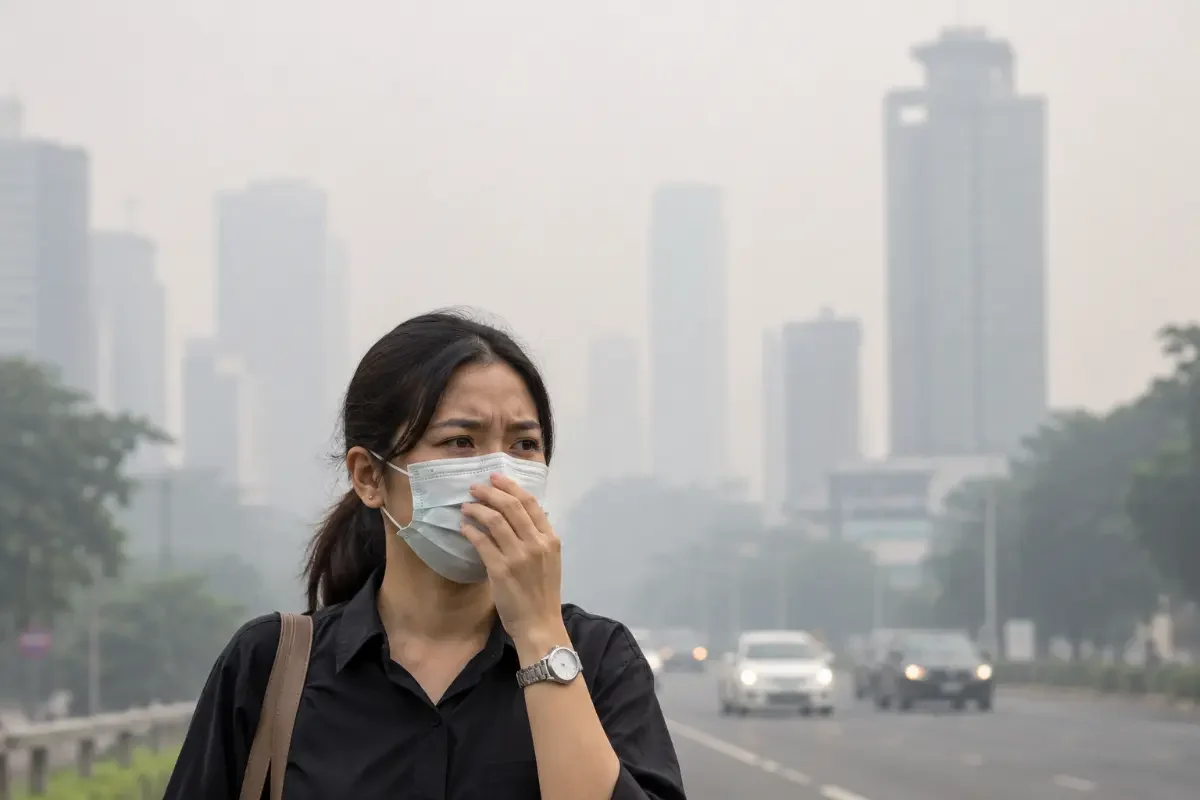
Prolonged forest and land fires across Indonesia have exposed millions of people to hazardous smoke, raising concerns about respiratory illness and worsening air quality across Southeast Asia.
More than 12.5 million people across seven Indonesian provinces had been exposed to wildfire smoke by September 9, 2026, according to figures from the Ministry of Health cited in a correspondence published in The Lancet. The health burden continued to grow, with authorities reporting 401,586 acute respiratory infection cases across seven provinces and 63 districts and cities by November 2. Children aged five and below accounted for 91,913 of those cases.
An earlier ministry assessment recorded 333,470 respiratory infection cases between August 18 and October 21 in the seven provinces most affected by the fires. The figures point to sustained pressure on healthcare services as residents face prolonged smoke exposure, particularly young children.
The haze also affected neighbouring countries. Singapore recorded an hourly PM2.5 concentration of 284 micrograms per cubic metre in its western region at 2pm on October 14, placing air quality in the very high pollution category. Malaysia closed schools in several states, while Timor Leste suspended face to face classes nationwide for three days from October 15 because of smoke from regional wildfires.
The health effects were also reported among families with young children. In Balikpapan, East Kalimantan, a 20 month old girl was diagnosed with pneumonia after developing a cough and difficulty breathing. An X-ray showed an infiltrate in the upper part of her left lung. Her family was told that smoke exposure may have contributed to her condition.
In a separate incident in Samarinda, a 14 month old girl died on October 15 after suddenly experiencing breathing difficulties. Her family suspected that the surrounding haze had played a role. However, local health authorities and the hospital disputed a connection between her death and the wildfires, so smoke exposure has not been established as the cause.
Firefighting operations have also carried risks. Mongabay reported that at least 10 people died while responding to wildfires across Borneo, Sumatra and Java. Among them was Nurdin, a 51 year old volunteer firefighter in South Kalimantan. He developed chest pain and breathing difficulties while working near a government office on October 21 and later died.
The Centre for Research on Energy and Clean Air estimated that short-term exposure to wildfire related air pollution contributed to approximately 5,200 deaths in Indonesia during August and September. The figure is based on pollution modelling and epidemiological analysis, not a count of individually confirmed deaths.
The mounting health burden has renewed calls for stronger measures to protect communities from hazardous air pollution. Experts have also stressed the need for better healthcare preparedness and more effective wildfire prevention to limit exposure before smoke spreads into populated areas.






DISCUSSION (0)