
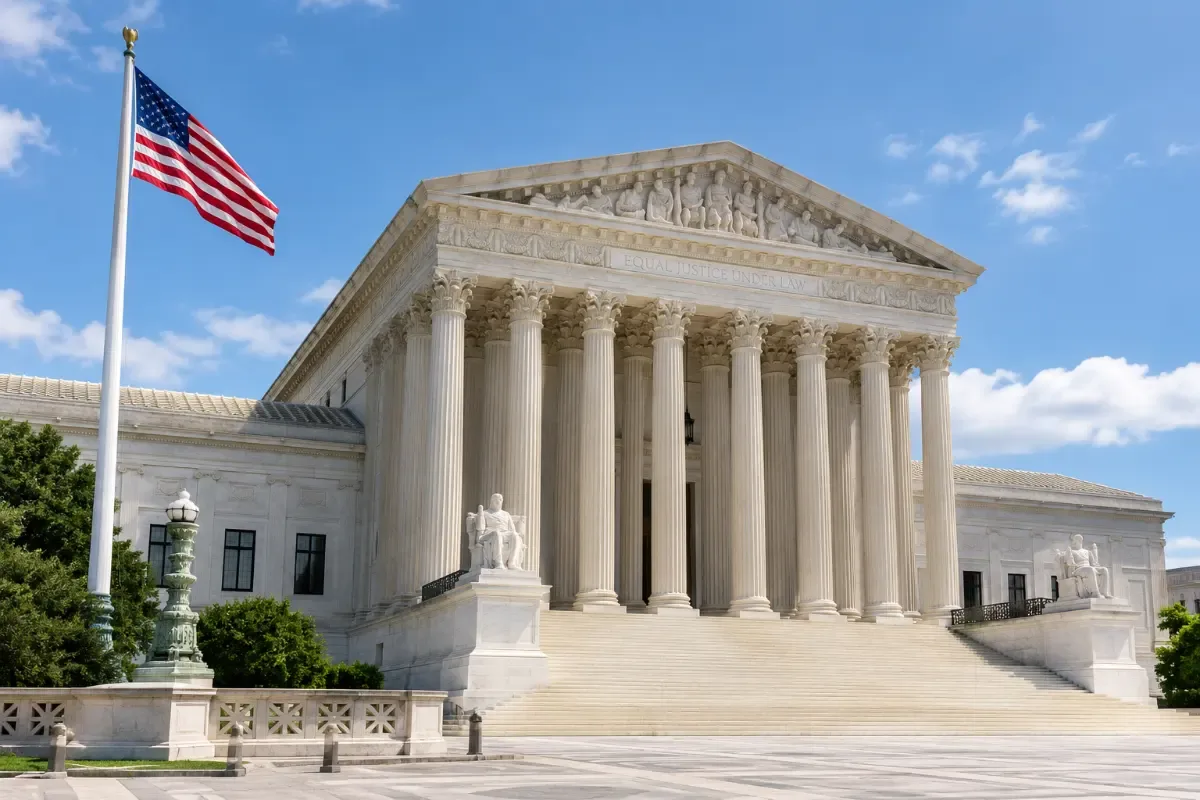
The US Supreme Court began hearing arguments Monday in a landmark case that could determine whether fossil fuel companies like Suncor Energy and ExxonMobil can avoid accountability for climate related damages through federal pre emption laws.
The case, Suncor Energy Inc v County Commissioners of Boulder County, centers on Boulder County’s 2018 lawsuit alleging the companies concealed climate risks while profiting from fossil fuels, forcing taxpayers to bear billions in disaster costs. The county seeks to hold the companies financially responsible for climate impacts that have already cost Colorado over $2 billion in wildfire damages alone, with projections reaching $37 billion by 2050.
At the heart of the dispute is whether federal law pre empts state courts from hearing climate change lawsuits. Suncor and Exxon argue that federal regulations, particularly the Clean Air Act, give federal courts exclusive jurisdiction over such cases, despite the law’s explicit provision that states retain primary responsibility for local air pollution control. Their legal team, led by Kannon Shanmugam, contended that climate change’s global nature makes state level litigation impractical, warning that allowing such lawsuits could flood courts with thousands of similar claims.
Boulder County’s attorney, Kevin Russell, countered that the industry’s argument ignores constitutional principles, asking justices to clarify whether any federal law explicitly invalidates state climate claims. Experts observed that the justices appeared divided, with some conservative members questioning the industry’s legal theories while others seemed persuaded by the argument that climate change’s complexity warrants federal oversight.
Justice Samuel Alito’s recusal left only five conservative justices to decide the case, meaning Boulder would need just one conservative ally to prevail. The hearing lasted nearly two hours, with justices focusing primarily on the merits rather than jurisdiction, suggesting a decision on whether federal law pre empts state climate cases is imminent.
Climate advocates and wildfire survivors rallied outside the court Monday, emphasizing the case’s broader implications. Daryl McCool, whose Boulder neighborhood was destroyed in the 2021 Marshall fire, a disaster linked to climate change, highlighted the human cost: “The case itself is meaningful because it affects every single human, every single creature.”
The Trump administration has historically sided with oil companies, reversing federal pollution regulations that once allowed climate heating emissions to be regulated. A ruling is expected by next summer, with potential consequences extending beyond Boulder, potentially blocking dozens of similar lawsuits across the country.
Legal scholars warn the outcome could set a precedent for future climate litigation, with some fearing the industry’s victory would effectively end state level accountability efforts. Others note that the Supreme Court has historically rejected similar pre emption arguments in cases involving tobacco and opioid industries, suggesting the justices may resist industry pressure to dismiss climate claims outright.






DISCUSSION (0)