
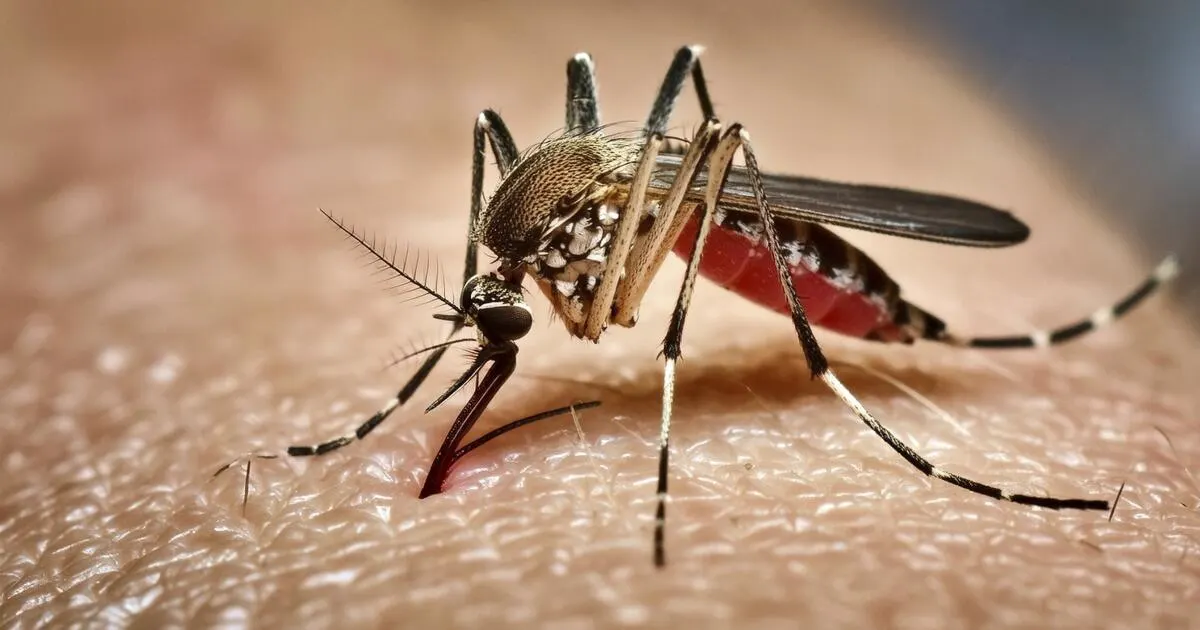
Los Angeles has endured one of its worst mosquito seasons in a decade, with record high activity fueled by relentless heatwaves and an unusually strong El Niño. Residents describe the summer as a “living hell,” as swarms of mosquitoes disrupt daily life, leaving outdoor dining unbearable and forcing some to sleep in long sleeves to avoid bites.
The city’s mosquito crisis has surged alongside a decade high spike in West Nile virus cases, with more than 180 confirmed infections reported by the Los Angeles County Public Health Department. Scientists attribute the outbreak to environmental conditions, particularly a mild winter with temperatures rarely dropping below 50°F (10°C) and a humid summer that extended the mosquito breeding season.
“This year has been especially nightmarish,” said Anais Medina Diaz, communications director for the San Gabriel Mosquito and Vector Control District. “We can attribute the higher mosquito and disease activity directly to the environment, particularly the warm winter and moist summer. Mosquitoes thrive when temperatures stay elevated, and the moisture gives them ideal conditions to reproduce.”
The most common mosquito species in the region, Culex quinquefasciatus, often called “quinx”, prefers birds over humans but serves as a critical vector for West Nile virus. After biting infected birds like crows, these mosquitoes can transmit the disease to people. Meanwhile, the invasive Aedes species, known locally as “ankle biters,” has proliferated since its arrival in 2014. Unlike Culex, Aedes mosquitoes target humans aggressively, often leaving larger welts due to their newness in the area.
Local authorities have deployed traps across Southern California, with 850 of them testing positive for West Nile virus this year, according to Brian Brannon, public information officer for the Orange County Mosquito and Vector Control District. “That doesn’t mean 850 mosquitoes, it means 850 traps full of infected mosquitoes,” Brannon explained. “We’ve had a busy season, but proactive spraying has helped prevent cases from reaching 2014 levels.”
Efforts to control the population include eliminating standing water, where Aedes mosquitoes can breed in pools as small as a tablespoon, and targeted adulticide spraying. More advanced techniques, like releasing sterile male mosquitoes to disrupt reproduction, have shown promise but remain costly and limited in scope. A pilot program in the San Gabriel Valley cost $30,000 to cover just 25 acres, and property owners have resisted funding increases for broader implementation.
Residents have turned to personal measures, such as wearing repellents containing DEET, picaridin, IR3535, or oil of lemon eucalyptus, and using electric fly zappers to kill indoor mosquitoes. “Most of our residents are used to not having mosquitoes, and that has now changed,” Medina Diaz said. “If you’re going to avoid bites, you’re going to have to make wearing repellent a part of your routine.”
With no end in sight to the heat and humidity, officials warn that the risk of mosquito borne diseases, including dengue, which can be introduced by travelers, will persist. “We can’t expect this to go away anytime soon,” Brannon said. “The best we can do is stay vigilant and keep reducing the adult mosquito population.”








DISCUSSION (0)