
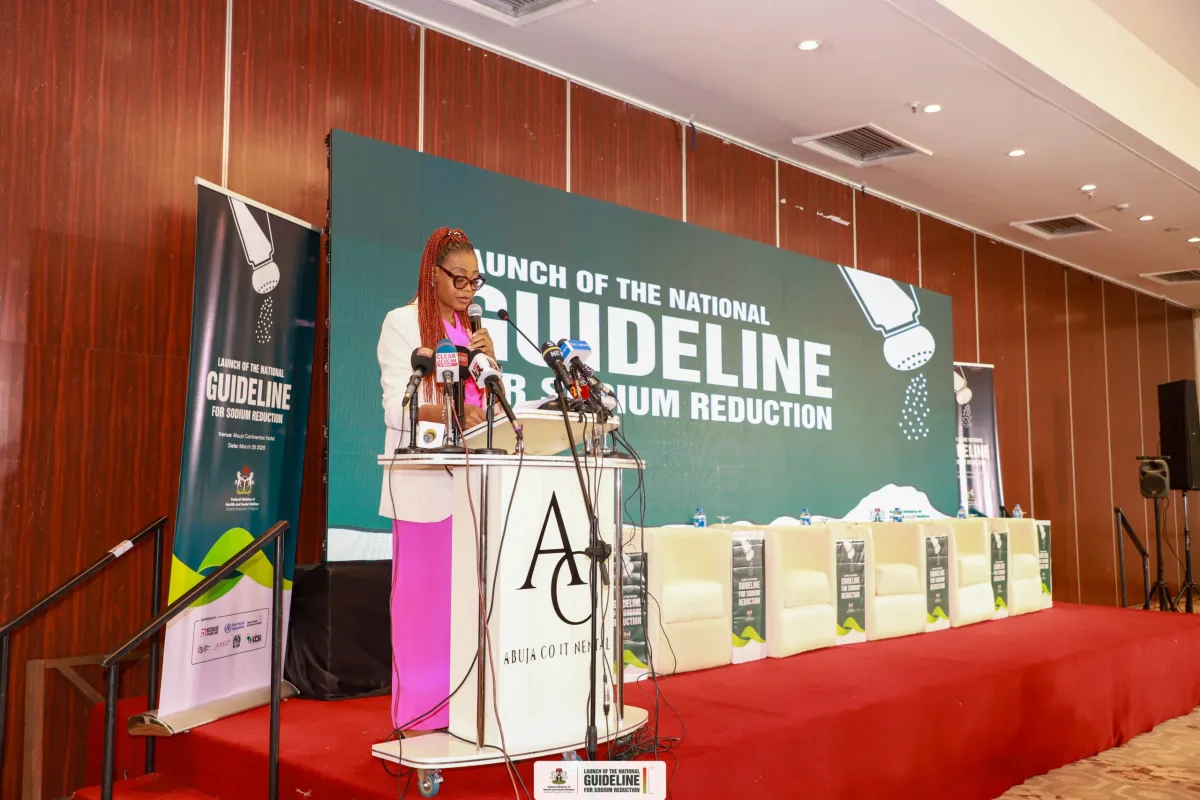
The Federal Ministry of Health and Social Welfare has launched a nationwide sodium reduction campaign to address Nigeria’s growing hypertension and cardiovascular disease epidemic, with a target of cutting sodium intake by 30 percent by 2030. The initiative, announced during a technical engagement with Kano State officials on May 19, 2026, emphasizes multi sectoral collaboration to reform food systems, public awareness, and healthcare delivery.
Speaking at the meeting, Kano State Commissioner for Health, Dr. Abubakar Labaran Yusuf, highlighted the urgency of the campaign, noting that excessive sodium consumption remains a primary driver of hypertension, a leading cause of premature death in Nigeria. The World Health Organization classifies high sodium intake as a major modifiable risk factor for cardiovascular diseases, which account for nearly 30 percent of all deaths globally. In Nigeria, where hypertension affects an estimated 30 million adults, the health burden is particularly severe, with limited access to treatment and prevention services in many regions.
The National Sodium Reduction Guidelines, developed in alignment with global best practices, outline a phased approach involving public education campaigns, engagement with food manufacturers to reduce sodium in processed foods, and integration of sodium monitoring into primary healthcare services. The strategy also targets high risk populations, including schoolchildren through nutrition interventions and school feeding programs, where sodium intake is often disproportionately high.
Representing the Coordinating Minister of Health, Mr. Femi Stephen of the Food and Drug Services Department underscored the role of state governments in implementing the campaign. "States are critical to achieving our sodium reduction targets," he stated. "We need coordinated efforts across healthcare, education, and food safety systems to create lasting change." The engagement in Kano marked the first step in establishing state level coordination mechanisms, regulatory frameworks, and community awareness initiatives to support the national goal.
Excessive sodium intake, primarily from processed foods, restaurant meals, and excessive salt use in cooking, has been linked to hypertension, stroke, and kidney disease. The Centers for Disease Control and Prevention estimates that reducing sodium intake by just 1 gram per day could prevent tens of thousands of heart attacks and strokes annually. For Nigeria, where healthcare infrastructure remains strained, the campaign offers a cost effective public health intervention with measurable impact.
The Federal Ministry of Health emphasized that the initiative aligns with broader efforts to combat non communicable diseases, which now account for 34 percent of Nigeria’s disease burden. By prioritizing sodium reduction, health officials aim to reduce the economic and social costs of hypertension related complications, including reduced productivity and healthcare expenditures. The campaign’s success will depend on sustained collaboration between federal and state governments, civil society, and the private sector to create an enabling environment for healthier dietary choices.
With the first phase of implementation underway, health authorities are focusing on Kano State as a pilot region to refine strategies before scaling up nationally. The campaign’s success could serve as a model for other African nations facing similar public health challenges, demonstrating how targeted policy interventions can address dietary risks and improve population health outcomes.








DISCUSSION (0)