
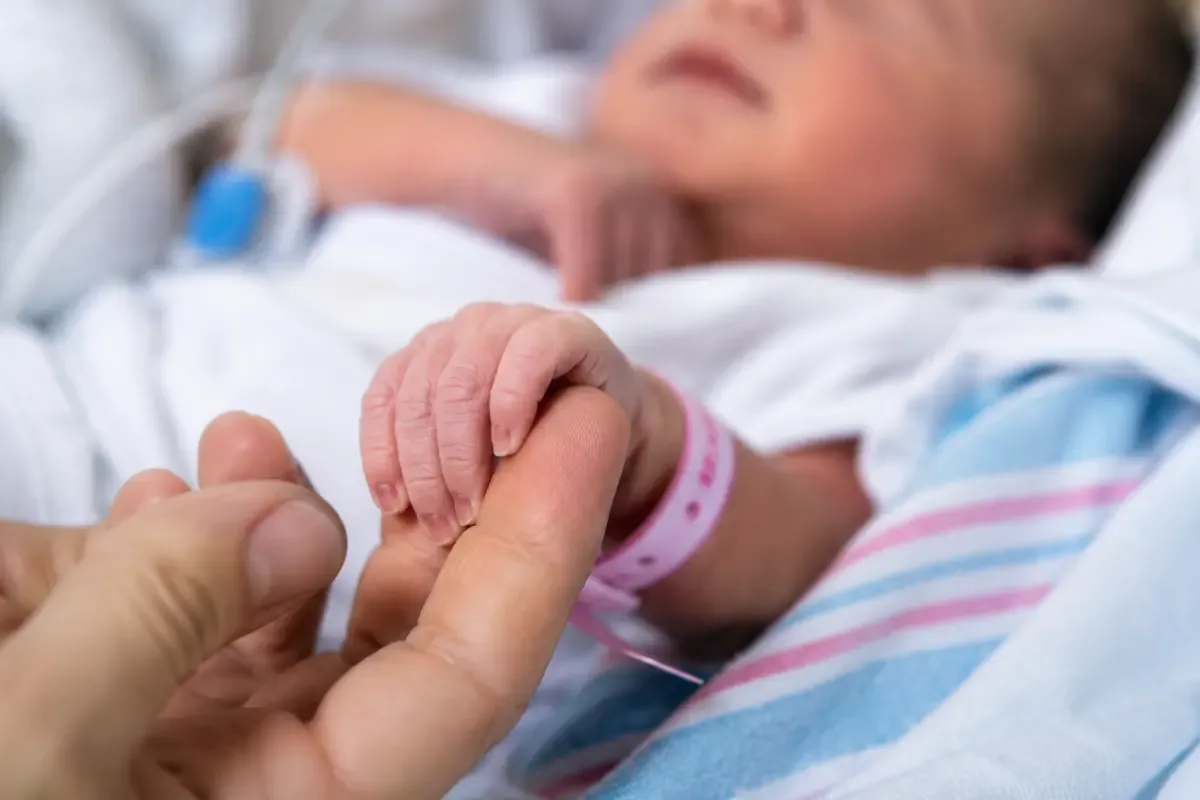
A former Nigerian minister has committed to covering the full ₦5 million cost of life saving surgery for a baby born with imperforate anus, a rare congenital condition that requires immediate medical intervention. Honourable Nkeiruka Onyejeocha, who previously served as Minister of State for Labour and Employment, announced the pledge during a week long free medical outreach in Isuikwuato/Umunneochi Federal Constituency, Abia State.
The infant, whose mother cannot afford the surgery, currently passes waste through an abnormal opening in the abdomen. Medical professionals had estimated the corrective procedure would cost between ₦3 million and ₦5 million, a financial burden the mother described as impossible to bear. Onyejeocha, who has led similar humanitarian medical missions for nearly two decades, vowed to ensure no child in her constituency dies due to poverty related healthcare access barriers.
‘If this outreach doesn’t help her, who will?’ she asked emotionally during a press briefing. ‘The young mother cannot even afford ₦50,000, yet she has been told to produce between ₦3 million and ₦5 million for surgery.’ Onyejeocha instructed the volunteer medical team to admit the child to a hospital and forward the bills directly to her, ensuring the procedure proceeds without delay.
The case underscores broader systemic challenges in Nigeria’s healthcare landscape, where rural families often face insurmountable financial barriers to treating rare but critical conditions. Onyejeocha, whose family tradition includes decades of grassroots medical aid, emphasized that private humanitarian efforts remain essential alongside government healthcare investments. ‘For me, every life matters,’ she stated. ‘If God gives me the strength and resources, I will continue because nobody should die simply because they are poor.’
This outreach, part of a 19 year commitment, aims to serve approximately 1,000 individuals, with severe cases receiving specialized care at Onyejeocha’s expense. If reelected to the National Assembly, she indicated she would critically evaluate existing health policies, leveraging her firsthand experience with grassroots medical disparities to advocate for systemic reforms.
While the Northern communities at the Lokpanta Regional Cattle Market praised Onyejeocha’s inclusion of their region in the outreach, leaders also highlighted persistent infrastructure gaps, including acute water shortages, which further strain healthcare access in the area.
The baby’s surgery, a medically urgent procedure to restore normal bowel function, represents a rare but critical intervention in Nigeria’s broader struggle to bridge the gap between medical necessity and financial feasibility for vulnerable families.








DISCUSSION (0)