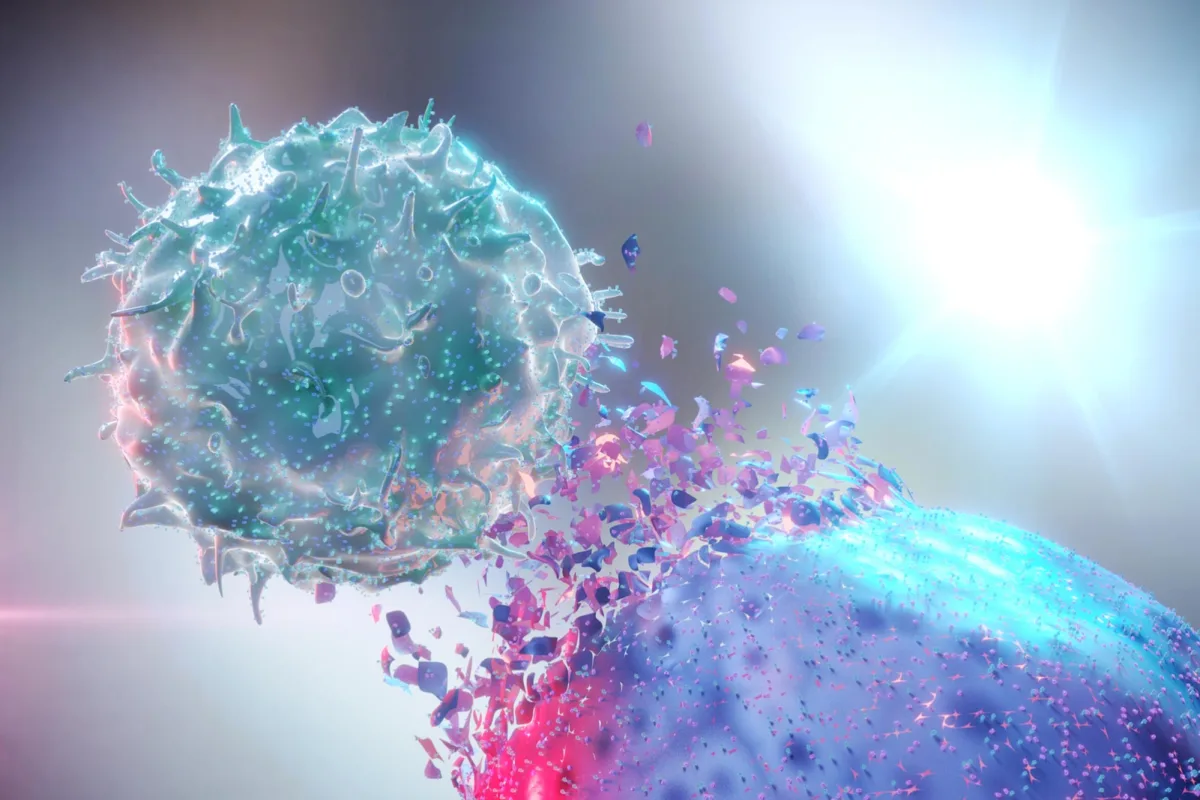
A seemingly essential nutrient may be inadvertently fueling cancer survival, according to groundbreaking research from the Rudolf Virchow Centre at Julius Maximilians Universität Würzburg (JMU). Scientists have discovered that vitamin B2, commonly known as riboflavin, plays a critical role in protecting tumor cells from ferroptosis, a form of programmed cell death that has emerged as a promising target in cancer treatment.
The findings, published in Nature Cell Biology, challenge long held assumptions about vitamin B2’s role in human health. While the vitamin is widely recognized for its antioxidant properties and its role in preventing oxidative damage, the JMU team led by Professor José Pedro Friedmann Angeli found that its metabolic pathways also fortify cancer cells against ferroptosis, a process driven by iron dependent lipid peroxidation that can eliminate malignant cells.
Ferroptosis, distinct from other forms of cell death like apoptosis, occurs when cells fail to neutralize harmful lipid peroxides. Cancer cells often evade this fate by reinforcing their antioxidant defenses, and the new study reveals that vitamin B2 metabolism is a key component of that protective shield. “Vitamin B2 plays a crucial role in safeguarding cancer cells from ferroptosis,” explained PhD student Vera Skafar, a member of the research team. “This suggests that disrupting its activity could make tumors more vulnerable to this form of cell death.”
To test this hypothesis, the researchers explored the potential of roseoflavin, a naturally occurring bacterial compound structurally similar to vitamin B2. In laboratory experiments using cancer cell models, roseoflavin demonstrated remarkable efficacy at inducing ferroptosis even at low concentrations. The compound appears to interfere with the same metabolic pathways that vitamin B2 relies on to protect cells, effectively turning the nutrient’s protective mechanisms against the cancer itself.
“Our experiments show that roseoflavin can trigger ferroptosis in cancer cells at minimal doses,” said Friedmann Angeli. “This opens up a promising new avenue for therapy, though we still need to develop more precise inhibitors to target vitamin B2 metabolism specifically in tumors.” The team is now focused on refining these inhibitors and advancing their research into preclinical cancer models.
Beyond oncology, the implications of this discovery extend to other diseases where ferroptosis plays a role. Friedmann Angeli noted that the process is increasingly linked to neurodegenerative conditions, organ transplantation complications, and ischemia reperfusion injury, suggesting that vitamin B2’s influence on ferroptosis could have broader therapeutic applications.
The research underscores the dual edged nature of even the most fundamental nutrients. While vitamin B2 remains essential for cellular function and human health, its unintended role in cancer survival highlights the need for targeted interventions that can exploit these metabolic vulnerabilities. If further developed, therapies based on this mechanism could represent a significant leap forward in precision oncology.


DISCUSSION (0)