
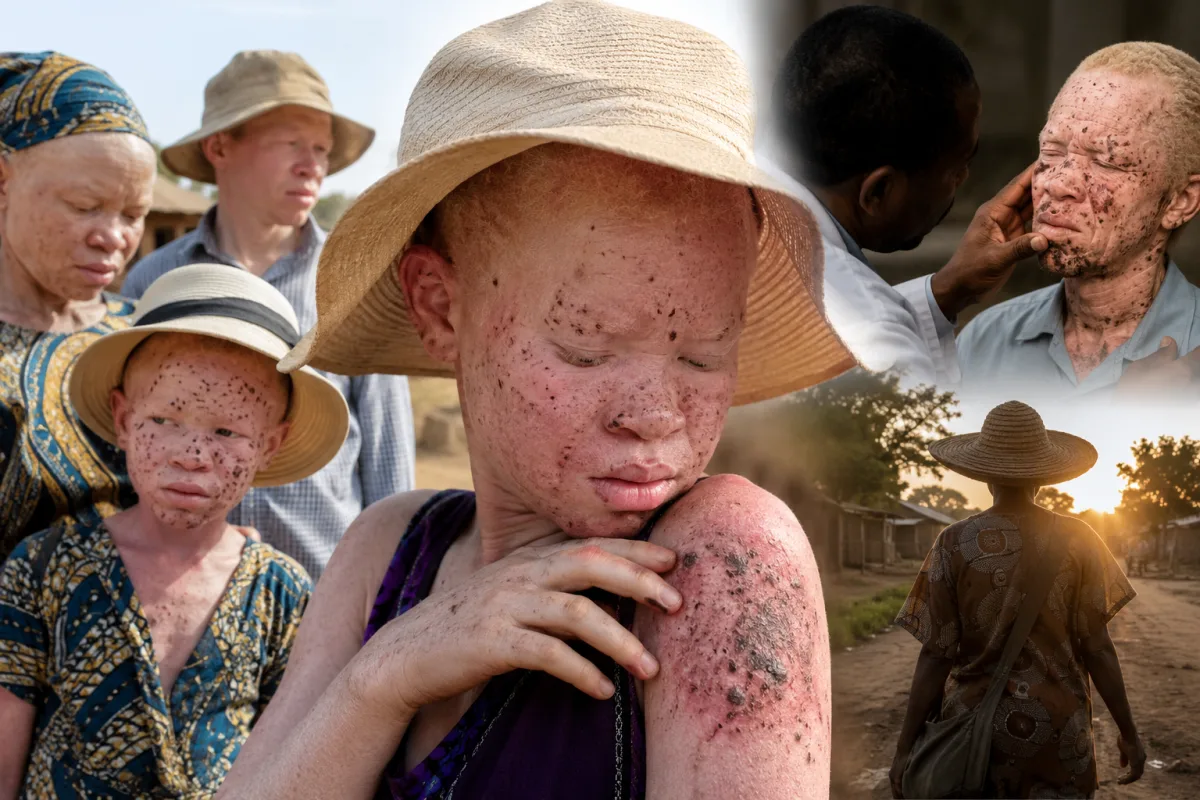
The Anambra State Albinism Association has sounded the alarm over a sharp rise in skin cancer cases among its members, with 16 active diagnoses currently requiring urgent medical intervention. According to Comrade Israel Ben Orizu, the State Chairman of the association, the surge underscores the severe vulnerability of people with albinism to ultraviolet radiation and the critical gaps in preventive healthcare access.
Speaking to Flobstar, Orizu emphasized that the cases are not merely statistical but represent real lives, fathers, mothers, students, and community leaders, whose health is under threat due to preventable conditions. Skin cancer, he explained, remains the leading cause of preventable illness and death among people with albinism in Nigeria, exacerbated by limited financial resources and inadequate healthcare infrastructure. Many affected individuals face financial barriers to accessing dermatological care, surgery, and essential medications, leaving them at heightened risk of severe complications.
The association has called on the Federal Government, the Anambra State Government, and healthcare stakeholders to prioritize solutions. Key demands include expanding health insurance coverage for albinism related skin cancer patients through the National Health Insurance Authority (NHIA), ensuring affordable access to sunscreen and protective clothing, and increasing dermatology services. Orizu also stressed the need for sustained public awareness campaigns to combat discrimination and promote early detection, as many cases go undiagnosed until advanced stages.
While the association has redirected limited resources toward prevention and treatment, Orizu urged broader collaboration to address systemic challenges. “No individual should die from preventable skin cancer due to poverty or lack of access,” he stated. The appeal extends to corporate partners, donor agencies, and philanthropists to support long term advocacy, healthcare access, and education for Nigeria’s albinism community.
The World Health Organization ([WHO](https://www.who.int)) has previously highlighted albinism related skin cancer as a global public health concern, particularly in regions with high UV exposure. Nigeria’s situation reflects broader challenges in equitable healthcare delivery, where marginalized groups often face disproportionate risks due to structural inequities.








DISCUSSION (0)