
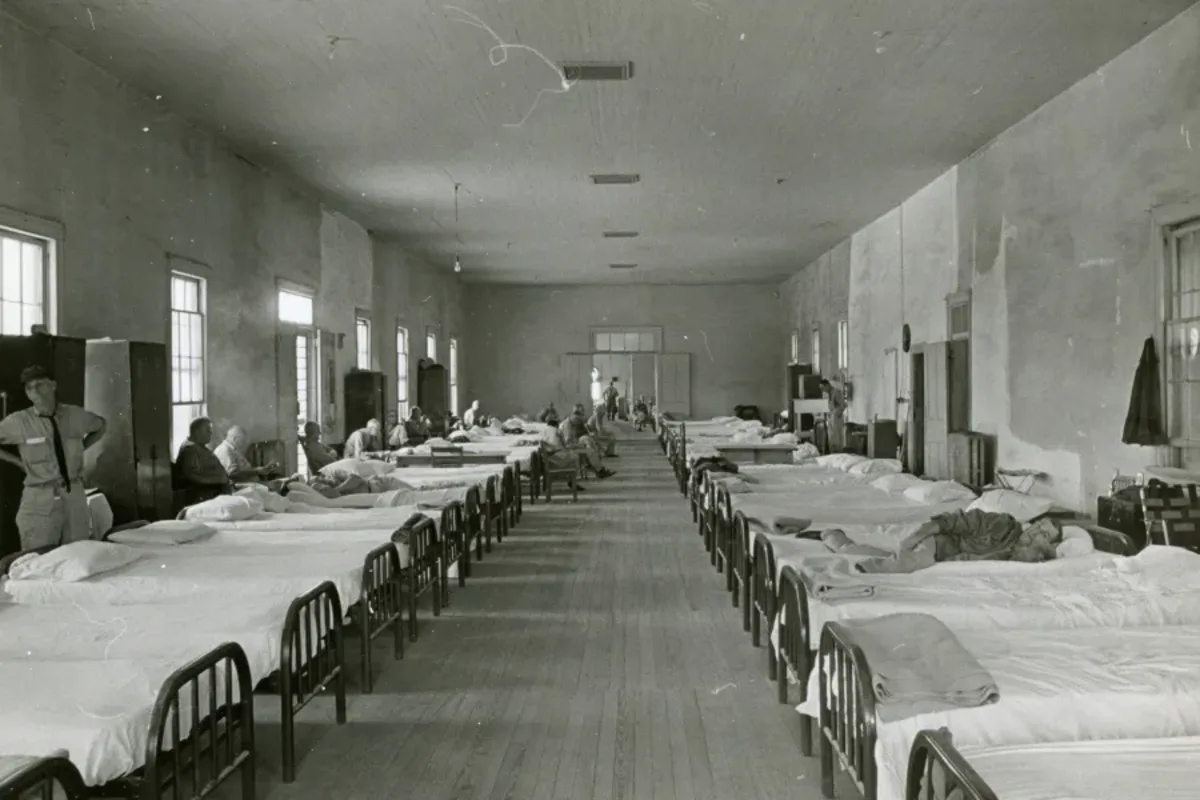
The descendants of patients institutionalized in America’s early psychiatric hospitals often face an impossible obstacle: state privacy laws that block access to records that could explain generational patterns of mental illness, suicide, or even unmarked graves.
Debby Hannigan, a great grandniece of Breta Meria Conole, a woman confined to a New York psychiatric hospital for over two decades, has spent years pursuing Conole’s medical records. She believed the files might hold clues to her family’s history of depression, including her oldest daughter’s struggles. Twice, Hannigan requested the records from the state of New York, even attaching a letter from her daughter’s therapist explaining the family’s medical history interest. Both times, her requests were denied.
Hannigan’s experience is far from unique. Across the U.S., families seeking to uncover the psychiatric histories of deceased ancestors, often to understand modern mental health challenges, are repeatedly stymied by laws designed to protect patient privacy, even decades after a person’s death. While some states, including Massachusetts and Washington, have loosened restrictions, others remain unchanged, leaving descendants in the dark.
Doug Clarke of Alfred, New York, has spent years attempting to access records of his great grandfather, a patient at a state hospital. He suspects the man’s institutionalization may explain why Clarke’s own generation has struggled with depression and bipolar disorder. “It really does piss me off that we couldn’t just say, ‘Here’s the proof, tell us what you know!’,” he said.
The history of America’s state run psychiatric institutions is one of both medical curiosity and systemic cruelty. By the late 1800s, nearly every state operated at least one asylum, where patients were admitted for reasons ranging from “brain fever” and “grief and anxiety” to “laziness” or “religious excitement.” While conditions varied, many institutions became notorious for neglect, overcrowding, and brutal treatment. In the 20th century, discredited practices like lobotomies and induced comas were performed within their walls.
Despite these abuses, the institutions generated vast records, detailed medical notes, photographs, and administrative files, that could now offer critical insights into modern mental health. Dr. Laurence Guttmacher, a former clinical director of New York’s Rochester Psychiatric Center, recalled receiving roughly two family requests per month for access to these records. Yet state officials consistently denied his attempts to release them, citing privacy protections.
The legal barrier stems from the 1996 Health Insurance Portability and Accountability Act (HIPAA), which extends patient privacy protections indefinitely, even after death. While some states have carved out exceptions for genealogical or historical research, others have not. This creates a patchwork of access, leaving many families unable to piece together their medical past.
The stakes are high. For families grappling with suicide, depression, or other mental health crises, these records could reveal patterns of inherited trauma or genetic predispositions. Dr. Christine Moutier, chief medical officer of the American Foundation for Suicide Prevention, draws a parallel: “Would you want to know if your grandfather died of a heart attack? It’s information that helps you understand how vigilant to be.”
Yet for some, the records hold even more: answers to long unanswered questions about unmarked graves. Alexandra Lord, a historian researching suicide in her family, has struggled to access New York state records about her great grandmother. Without them, she remains unable to confirm when, or how, the woman died.
Advocates argue that these records should be preserved not just for personal healing, but for public health. Understanding historical patterns of mental illness could inform modern prevention efforts. However, without policy changes, families like Hannigan’s and Clarke’s will continue to be denied the right to know their own medical history, even when it’s buried in decades old institutional files.







DISCUSSION (0)