
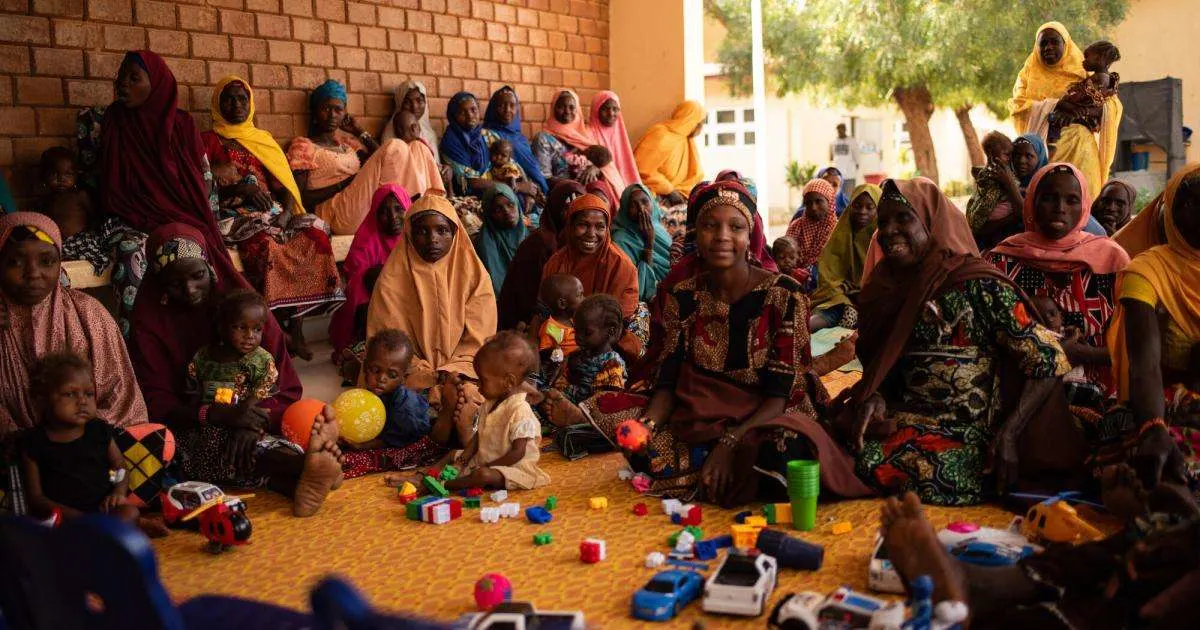
Nigeria is facing a worsening child malnutrition crisis, with 440,000 children admitted for severe acute malnutrition in 2025, the highest annual caseload recorded in the country, according to Médecins Sans Frontières (MSF). The alarming surge, detailed in MSF’s 2025 Country Activity Report, underscores the devastating impact of economic hardship, conflict, and humanitarian funding shortfalls on Nigeria’s most vulnerable populations.
The data reveals a catastrophic escalation from 2024, when nearly 300,000 children were treated for severe malnutrition in northern Nigeria alone, already more than half of MSF’s global malnutrition caseload. The 2025 figures mark a stark 47% increase in admissions, driven by overlapping crises: prolonged insecurity, displacement, inflation, flooding, drought, and soaring food prices. These factors have severely disrupted families’ ability to access both food and healthcare, exacerbating an already fragile healthcare system.
Stunted growth, a hallmark of chronic malnutrition, compromises children’s immune systems, making them far more susceptible to infections and increasing child mortality rates. Pregnant women suffering from malnutrition are also at higher risk of delivering low birth weight babies, further endangering infant survival. Despite decades of awareness, Nigeria’s health authorities have yet to implement sustained, large scale interventions to address this persistent crisis. As early as 2008, the WHO and Nigeria’s National Demographic and Health Survey (NDHS) reported that one in three children under five in Nigeria was stunted, a figure that has likely worsened in the intervening years.
The consequences of malnutrition extend beyond physical health, perpetuating cycles of poverty. Malnutrition weakens cognitive and physical development, limiting children’s ability to thrive in school and later in the workforce. Meanwhile, families trapped in poverty struggle to afford nutritious diets, deepening their economic vulnerability. Experts emphasize that exclusive breastfeeding for the first six months, followed by nutrient rich complementary feeding for up to two years, is critical to preventing malnutrition. Yet, systemic barriers, including food insecurity, healthcare access, and socioeconomic inequality, continue to thwart progress.
MSF’s Country Representative in Nigeria, Ahmed Aldikhari, highlighted the urgent need for political commitment and coordinated action. “Conflict, insecurity, and humanitarian funding cuts are placing immense pressure on our healthcare systems,” he stated. “Without immediate intervention, the lives of hundreds of thousands more children will be at risk.”
Experts call for a multi pronged strategy, including fortifying staple foods with essential vitamins and minerals, scaling up community based nutrition programs, and strengthening partnerships between government, civil society, and academic institutions. Yet, as the report notes, rhetoric alone is insufficient, urgent, decisive policy action is required to protect Nigeria’s children from this preventable crisis.
The stakes could not be higher. With over half of Nigeria’s children under five at risk of stunted growth or acute malnutrition, the country’s future hinges on whether its leaders will prioritize nutrition as a cornerstone of public health policy, or allow this preventable tragedy to continue unchecked.








DISCUSSION (0)