
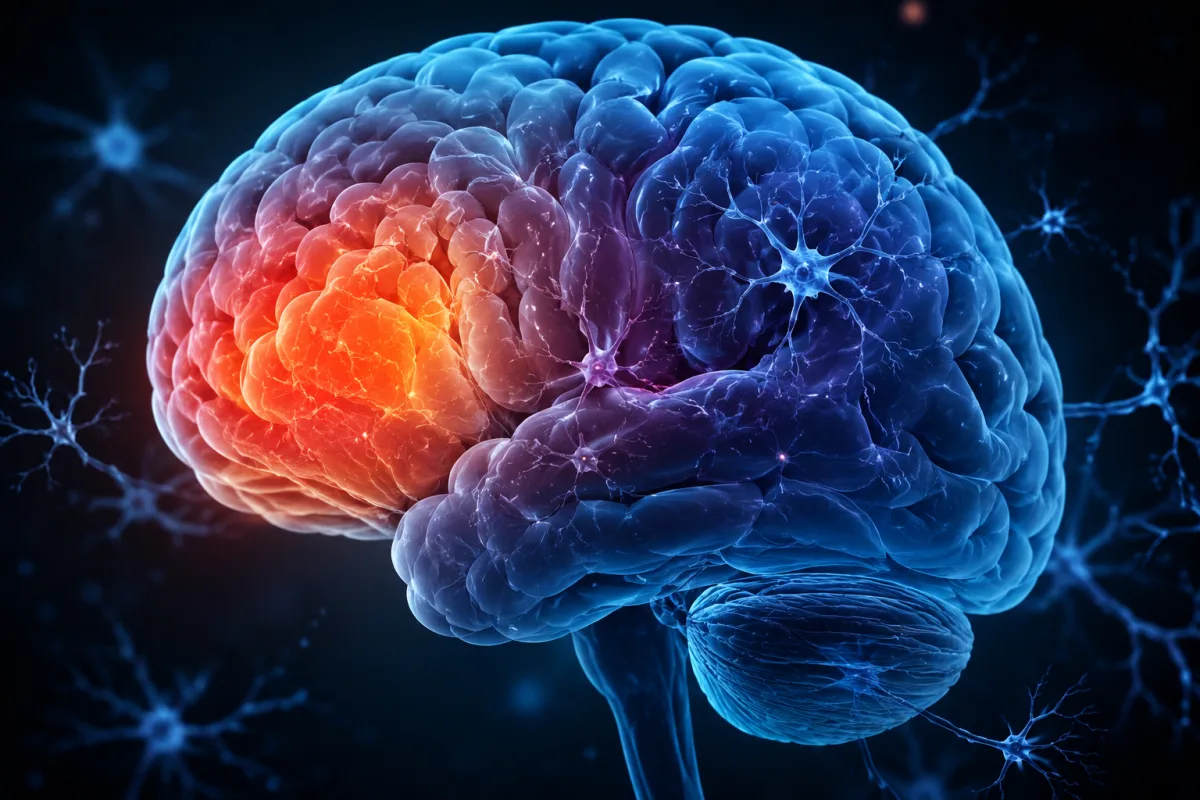
A groundbreaking study from Texas Children’s Hospital and Baylor College of Medicine has uncovered why some brain regions are far more vulnerable to neurological diseases, even when harmful proteins are present throughout the brain. The findings, published in Genes & Development, could redefine how we approach treatments for conditions like spinocerebellar ataxia type 1 (SCA1), a rare neurodegenerative disorder.
The research centers on the World Health Organization-classified neurodegenerative disease SCA1, which destroys coordination, speech, and swallowing due to damage in the cerebellum, the brain’s control center for movement and balance. The disease stems from a mutated ATXN1 gene, producing an overactive, toxic protein that accumulates in cells. While the ATXN1 gene is active across the brain and other organs, the cerebellum and brainstem bear the brunt of the damage.
Dr. Huda Zoghbi, corresponding author and founding director of the Duncan Neurological Research Institute, explained the paradox: Why does the cerebellum suffer while other regions remain relatively unaffected?
The answer lies in the interaction between the toxic ATXN1 protein and another key protein, Capicua (CIC), which is also widespread in the brain. Previous research had shown CIC’s role in disease progression, but its tissue specific effects remained unclear.
The team discovered that CIC exists in two forms, CIC Long (CIC L) and CIC Short (CIC S), each with distinct roles. While both ATXN1 and its close relative, ataxin 1-like (ATXN1L), bind to the same region of CIC, the differing ends of CIC L and CIC S lead to unique biological outcomes. For instance, mice lacking CIC S exhibited severe developmental issues, particularly in the lungs, while those missing CIC L showed fluid buildup in the brain, a condition called hydrocephalus.
Further experiments revealed that removing ATXN1 alone didn’t cause ataxia but instead triggered learning and memory deficits, mirroring symptoms of Alzheimer’s disease. This suggests that the cerebellum’s vulnerability in SCA1 isn’t just about the presence of the toxic protein but how it interacts with CIC in specific brain regions. The study also noted that ATXN1L’s absence led to perinatal mortality and lung defects, reinforcing that these proteins have distinct, tissue specific functions.
The implications are profound. By targeting specific forms of CIC or ATXN1, therapies could be tailored to protect the most vulnerable brain regions. This isn’t just about SCA1, it could apply to other neurodegenerative diseases where protein toxicity plays a role,
said Hamin Lee, the study’s first author. The research highlights the complexity of neurological disorders and opens new avenues for precision medicine in treating brain damage.





DISCUSSION (0)