
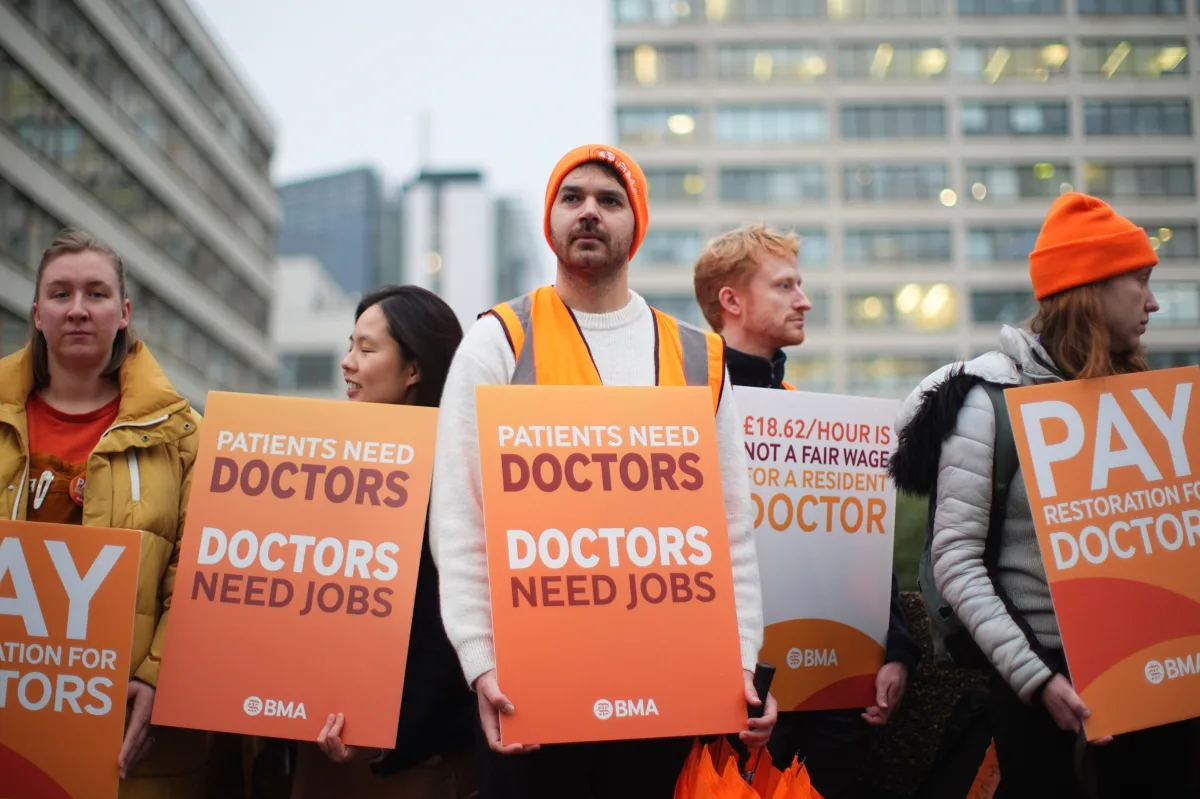
The British Medical Association (BMA) has announced a four day strike by resident doctors in England, scheduled for June 15, 19, escalating a long standing dispute over pay and working conditions. This will be the 16th strike since 2023, reflecting persistent tensions between the medical workforce and government negotiations.
The BMA, representing nearly half of all doctors in England, including those in accident and emergency departments and general practice, has criticized the new Health Secretary, James Murray, for repeating the same stance as his predecessor. Murray has dismissed the union’s demands as "unrealistic, unaffordable, and unsustainable," while the BMA argues that resident doctors remain underpaid compared to 2008 levels when adjusted for inflation.
Resident doctors, who have completed medical training and often hold significant clinical responsibility, earn between £40,000 and £76,500 annually, depending on experience. Despite receiving a 33% pay increase over the past four years, including a 3.5% rise in April 2026, the BMA contends that the government’s use of the Consumer Prices Index (CPI) for inflation adjustments fails to account for the higher interest rates on student loans, which are calculated using the Retail Prices Index (RPI).
Dr. Jack Fletcher, BMA resident doctor leader, accused Murray of missing an opportunity to resolve the dispute with meaningful concessions. "Instead, we hear the same vague promises about new roles and no additional funding," Fletcher stated. The government, however, insists that the 33.4% pay rise over four years is the highest in the public sector and that further substantial increases are not feasible.
To address workforce shortages, the government has pledged to expand specialist training posts by 4,000 by 2028, with the first 1,000 available in 2026. These positions will prioritize doctors who studied and trained in the UK. Additional measures include covering exam fees and accelerating pay progression through the five tier salary bands. However, the BMA ended negotiations in March, alleging that earlier agreements were undermined at the last moment.
During previous strikes, the NHS advised patients not to delay seeking emergency care, urging those with urgent needs to use 999 or 111 services as usual. The upcoming strike follows a pattern of industrial action as resident doctors push for fair compensation and sustainable working conditions amid rising demand on the NHS.





DISCUSSION (0)