
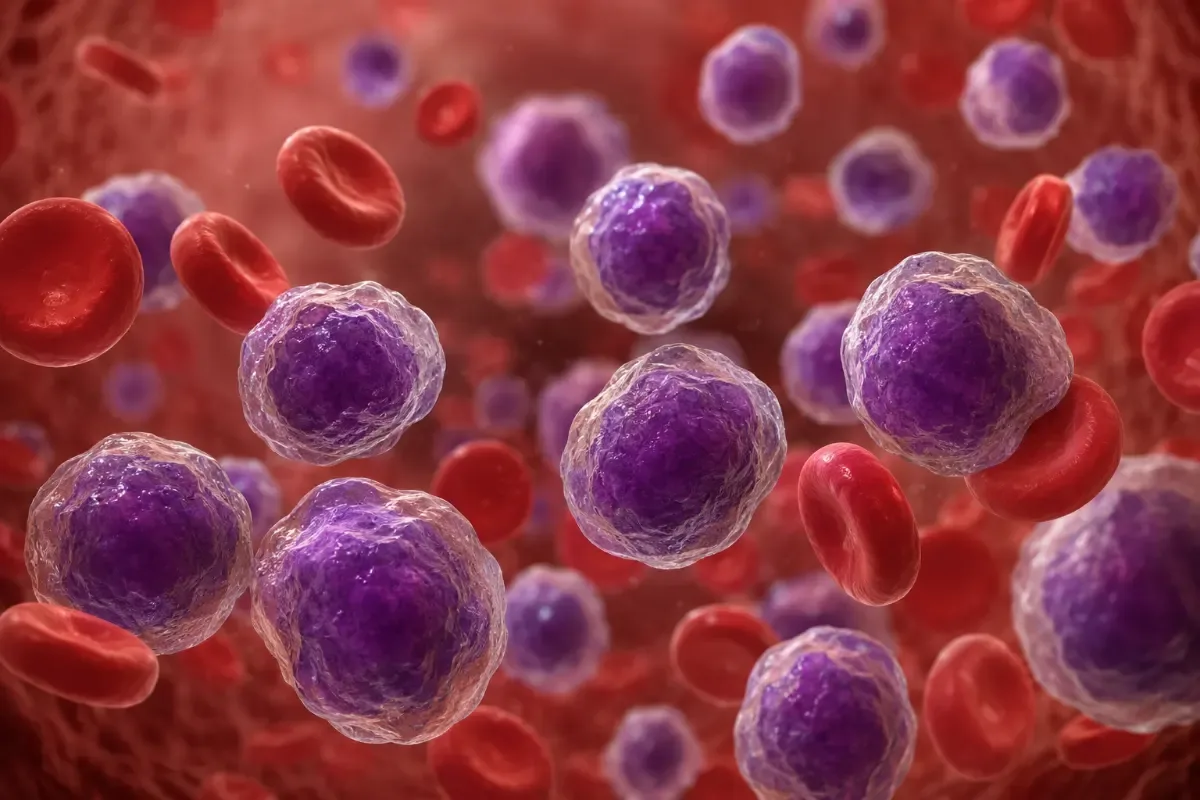
A groundbreaking study by Iowa State University researchers has uncovered two essential cellular components that may unlock the maturation of stalled leukemia cells, presenting a promising avenue for treating aggressive forms of blood cancer.
The bone marrow’s blood cell production machinery often fails in leukemia, particularly in its most aggressive forms. Normally, precursor cells divide rapidly to generate billions of new cells daily, but in leukemia, these progenitor cells become trapped in an immature state. Instead of developing into functional white blood cells, they proliferate uncontrollably, overwhelming the bone marrow and disrupting normal blood production.
"These progenitor cells don’t fulfill their intended function, they simply expand and collapse the bone marrow’s capacity," said Raquel Espin Palazon, an associate professor of genetics, development, and cell biology at Iowa State University. "They never mature into what they should be."
The research, published in Cell Reports, identifies two key elements, progranulin, a widely expressed protein, and the JAK2/STAT3 signaling pathway, that are critical for the proper development of myeloid cells, a type of white blood cell. When either component is missing, these cells fail to mature into functional macrophages or neutrophils.
Progranulin’s role in human health has long been studied, particularly its involvement in cell growth, tissue repair, and inflammation. However, its specific function in macrophages, large white blood cells responsible for engulfing and removing pathogens, remained unclear. Espin Palazon’s team sought to understand why progranulin is the most highly expressed gene in human macrophages, given its broad role in other tissues.
Studying progranulin in mammals is challenging due to the single gene encoding it, which makes isolating its effects difficult. However, zebrafish, commonly used in human health research, possess two distinct progranulin genes. In a 2021 study, Espin Palazon’s team demonstrated that one of these genes is exclusively expressed in blood cells and is essential for myeloid progenitors to develop into macrophages and neutrophils.
To test whether progranulin could similarly drive myeloid maturation in humans, the researchers introduced it into human leukemia cells. Initially, the protein failed to induce differentiation, suggesting that another factor was required.
Further investigation revealed that the JAK2/STAT3 signaling pathway, often hyperactivated in cancers, including leukemia, was also necessary for myeloid differentiation. When both progranulin and an active JAK2/STAT3 pathway were present, leukemia cells began to mature, progressing through their normal life cycle and eventually dying off. This breakthrough suggests that restoring these two components could potentially reverse the stalled maturation process in leukemia.
"Seeing the differentiation block in human leukemia cells overcome was incredibly exciting," Espin Palazon said. "Adding progranulin as the missing component could represent a promising therapeutic target."
The findings highlight the importance of studying living organisms rather than isolated cells, as the interplay between progranulin and JAK2/STAT3 emerged only through research on whole organisms like zebrafish.
This discovery offers a new direction for leukemia treatment, potentially paving the way for therapies that restore normal cell maturation and reduce the burden of aggressive blood cancers.




DISCUSSION (0)