
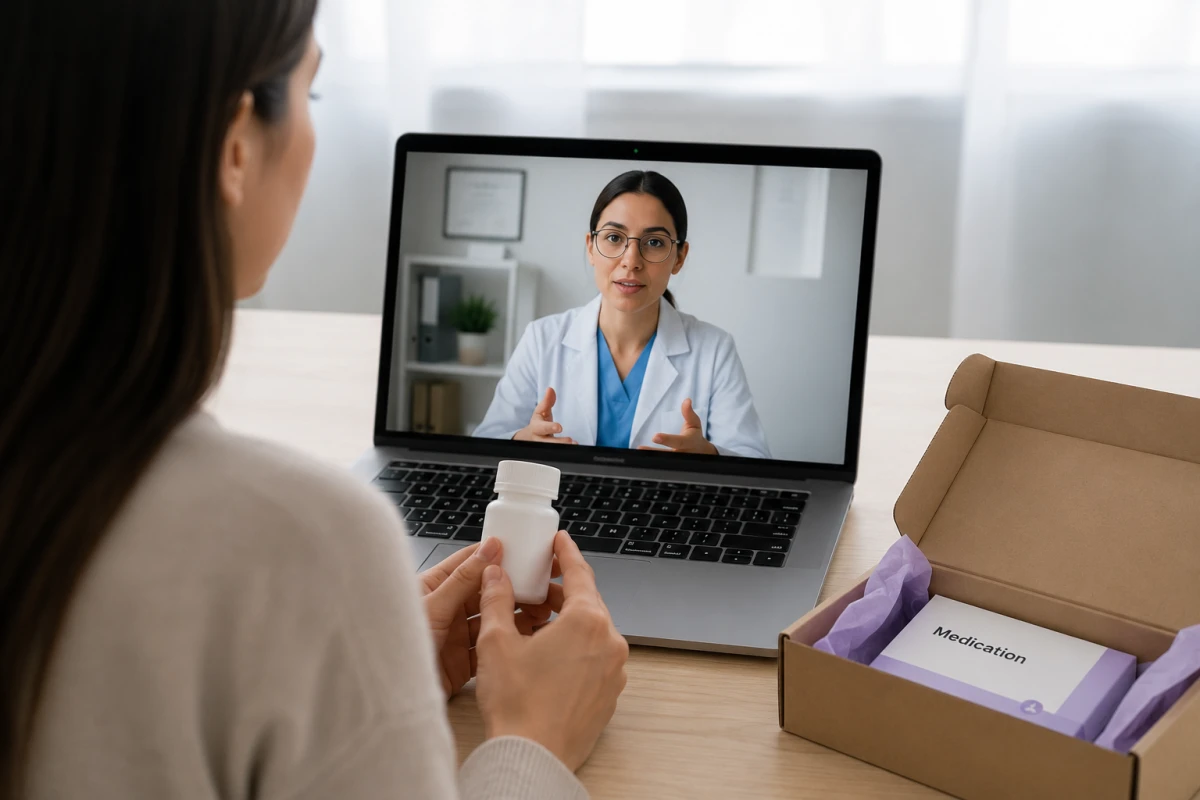
The United States is witnessing a significant shift in abortion care delivery, with telehealth now accounting for nearly 30% of all abortions, a trend that legal restrictions appear unable to halt, according to new data from the Society of Family Planning’s #WeCount report.
Since the U.S. Supreme Court overturned Roe v. Wade in 2022, the number of abortions nationwide has risen sharply, and telehealth has emerged as a critical workaround for states imposing bans. The rise of telehealth abortion services reflects broader public awareness and demand for medication abortion, a two drug regimen (mifepristone and misoprostol) that can be safely administered at home. Legal challenges, however, have intensified as states like Louisiana seek to block the mailing of abortion pills, arguing that telehealth providers violate state sovereignty.
In a recent legal setback, Louisiana’s lawsuit to restrict telehealth access to mifepristone was temporarily halted by the U.S. Supreme Court, which restored access while a lower court reviews the case. The lawsuit, backed by 21 other states, targets telehealth providers that allow patients to obtain abortion medications remotely, often through mail order pharmacies or international suppliers. Yet experts warn that these efforts may prove futile, as telehealth providers have already adapted to similar restrictions in the past.
“We like to say the genie is out of the bottle,” said Elisa Wells, co founder and access director of WHO-endorsed telehealth initiatives like Plan C, which provides guidance on accessing abortion pills online. “Once people realize they can obtain safe, effective, and affordable care through telehealth, there’s no turning back.”
Telehealth providers have long prepared for potential restrictions on mifepristone, the FDA approved drug that blocks progesterone to terminate early pregnancies. If mifepristone were further limited, many organizations would pivot to using misoprostol alone, a medication already approved by the FDA for ulcer treatment but widely used off label for abortion care. Legal barriers to misoprostol remain minimal, as the FDA does not regulate off label use, according to David Cohen, a law professor at Drexel University and national expert on abortion law.
“For misoprostol to be banned, there would need to be a finding that it’s unsafe or ineffective for its approved use, which is impossible to justify,” Cohen said. “The FDA has never revoked approval for a drug solely because it’s used off label.”
Some telehealth companies, including Carafem, already tested this strategy in 2021 when the Supreme Court temporarily reinstated in person dispensing requirements for mifepristone. During that period, Carafem shifted entirely to misoprostol based regimens, a model it has maintained ever since. Other organizations, such as Aid Access, have expanded access by directing patients to mifepristone sourced from international pharmacies, including those in India.
Even if the Trump administration attempted to enforce the Comstock Act, an 1873 federal law originally targeting obscene materials and abortion related correspondence, enforcement would face significant hurdles. Cohen compared the challenge to the decades long “War on Drugs,” noting that illegal drugs remain widely accessible despite prohibition efforts. “If someone wants abortion pills, they can find them, often delivered within hours, just as they can with other controlled substances,” he said.
The persistence of telehealth abortion access has drawn sharp criticism from anti abortion advocates, who view it as a direct threat to their policy goals. The Heritage Foundation, in its Project 2025 blueprint for a potential second Trump administration, labeled medication abortion “the single greatest threat to unborn children in a post Roe world.” Advocates like Kristi Hamrick, vice president of media and policy for Students for Life of America, have urged the Department of Justice to prioritize enforcement of the Comstock Act, though legal experts question the law’s applicability to modern telehealth practices.
Louisiana’s ongoing lawsuit represents the most aggressive legal front against telehealth abortion, with a federal appeals court currently evaluating whether states can block cross border telehealth services. For now, the trend toward telehealth abortion persists, driven by patient demand and the resilience of providers who have repeatedly outmaneuvered legal obstacles. As one expert noted, the shift reflects a broader societal recognition that abortion care is a fundamental right, one that cannot be easily erased by legislative or judicial action alone.








DISCUSSION (0)