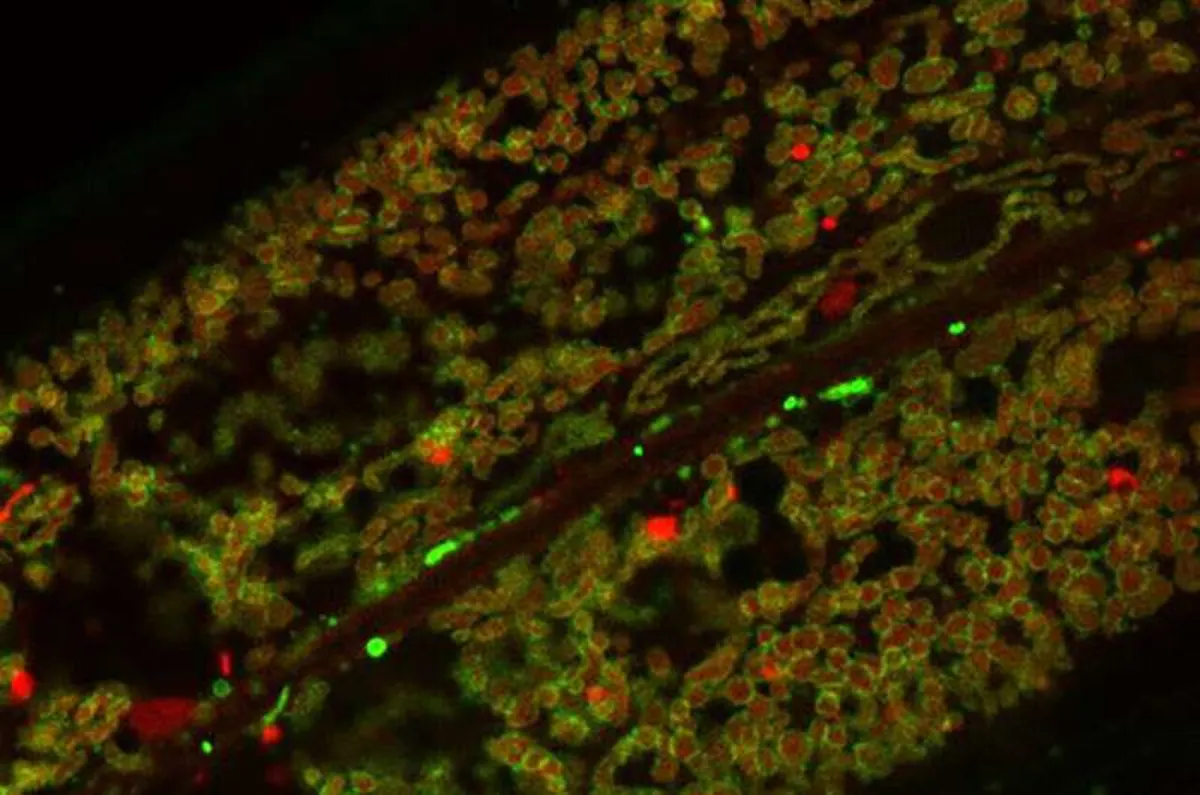
A groundbreaking study from the University of Cologne has uncovered a direct link between the amino acid leucine and improved mitochondrial function, revealing how this nutrient may reshape approaches to treating metabolic diseases and cancer.
Mitochondria, often called the body’s cellular power plants, generate the energy cells need to function. While scientists have long understood that nutrients influence mitochondrial activity, the precise mechanisms by which cells sense and respond to these nutrients remained unclear, until now. Researchers led by Professor Dr. Thorsten Hoppe at the Institute for Genetics and the CECAD Cluster of Excellence on Aging Research found that leucine, an essential amino acid found in protein rich foods like meat, dairy, beans, and lentils, plays a pivotal role in preserving critical energy producing proteins within mitochondria.
The study, published in Nature Cell Biology, titled "Leucine inhibits degradation of outer mitochondrial membrane proteins to adapt mitochondrial respiration", demonstrates that leucine prevents the breakdown of proteins on the outer mitochondrial membrane. These proteins are essential for transporting metabolic molecules into mitochondria, ensuring efficient energy production. By stabilizing these proteins, leucine enhances mitochondrial performance, allowing cells to meet heightened energy demands more effectively.
The discovery hinges on a protein called SEL1L, which normally functions as part of the cell’s quality control system, tagging damaged or misfolded proteins for degradation. The research shows that leucine suppresses SEL1L activity, reducing the breakdown of mitochondrial proteins and thereby improving cellular energy efficiency. While this mechanism offers potential for boosting energy production, the authors caution that SEL1L also plays a vital role in preventing the accumulation of damaged proteins, which is crucial for long term cellular health.
To assess broader implications, the team studied the effects of leucine metabolism in Caenorhabditis elegans (a model organism) and human lung cancer cells. They found that disruptions in leucine metabolism could impair mitochondrial function and even lead to fertility issues in the worms. In cancer cells, certain mutations affecting leucine metabolism appeared to enhance cell survival, suggesting a potential link between leucine pathways and tumor progression.
"This work demonstrates that nutrients like leucine don’t just fuel the body, they actively regulate how cells generate and manage energy at a molecular level," said Dr. Qiaochu Li, the study’s first author. "Understanding these mechanisms could open new avenues for therapeutic strategies in metabolic diseases and cancer."
The findings highlight leucine’s dual role: as a building block for proteins and now as a regulator of mitochondrial efficiency. While further research is needed to explore clinical applications, this discovery underscores the intricate connection between diet, cellular energy, and disease, offering a promising direction for future medical interventions.






DISCUSSION (0)