2 min read

Robotic knee surgery precision does not always speed up recovery

Robotic knee surgery precision does not always speed up recovery

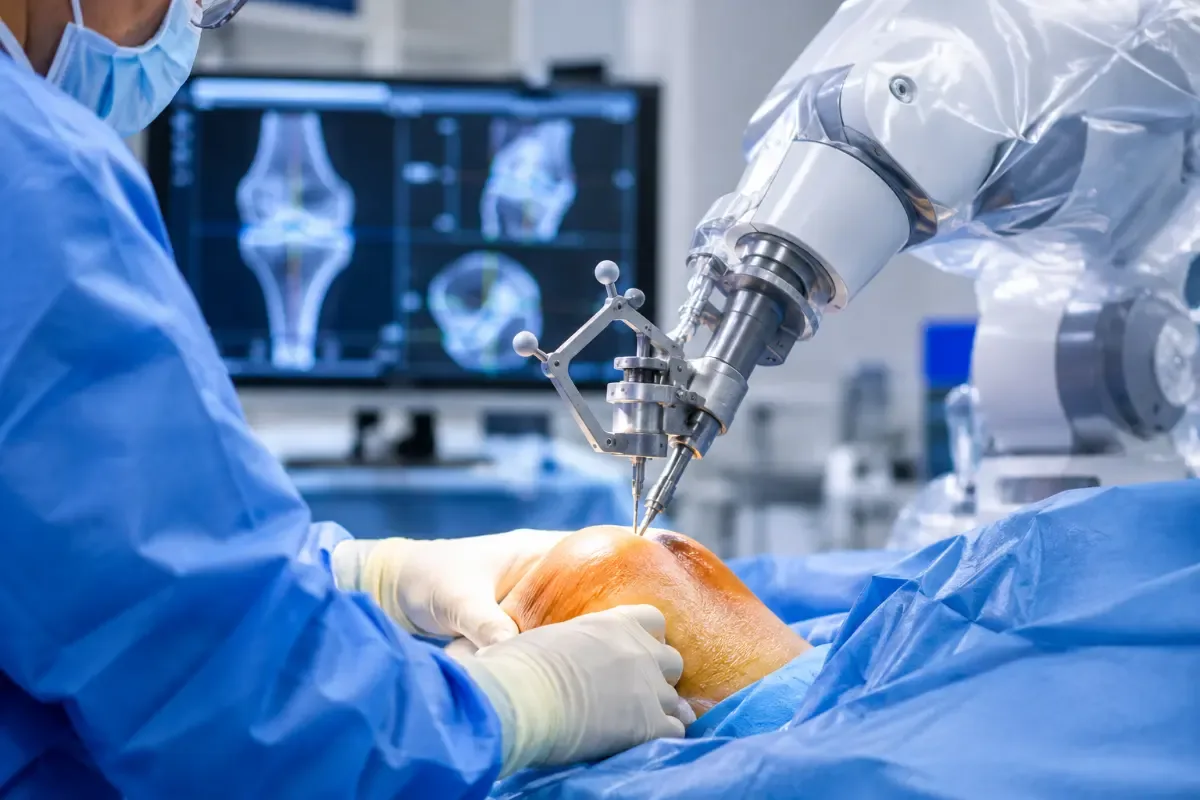
Robotic assistance is changing how surgeons perform total knee replacement, helping them plan procedures, map bone structures and guide surgical movements in real time. However, large scale clinical trial findings suggest that greater surgical precision does not necessarily translate into better patient recovery.

Orthopaedic specialists discussed the technology during a webinar hosted by The Hindu in association with Kauvery Hospital. They explained that traditional manual measurements can vary by two to three millimetres, even among experienced surgeons, while robotic systems help improve the accuracy of bone cuts and implant positioning.

Despite these potential advantages, findings from the RACER Knee trial, published in The Lancet and coordinated by the University of Warwick and University Hospitals Coventry and Warwickshire NHS Trust, offer a more measured assessment of its benefits.

Described as the world's largest clinical study of its kind comparing conventional knee replacement with procedures using the Stryker Mako robotic system, the trial found that patients in both groups experienced comparable levels of recovery, mobility and pain 12 months after surgery.

During the webinar, Dr. Mukunth compared robotic assistance to GPS navigation, explaining that the technology guides the surgeon but does not take over the operation. Other specialists said more accurate implant positioning could help limit soft tissue damage and blood loss. They also suggested that improved surgical precision may support earlier movement and muscle strengthening, potentially reducing recovery time by two to three weeks compared with conventional surgery.

Robotic assisted knee replacement has gained different levels of adoption across healthcare systems. The figures presented during the discussion showed that the technology accounts for approximately 6 per cent of procedures in the United Kingdom, 16 per cent in the United States and 42 per cent in Australia.

The RACER Knee trial, funded by the National Institute for Health and Care Research in partnership with Stryker, also found no increased risk of serious adverse events associated with robotic assistance. Its findings indicate a safety profile comparable to conventional surgery, while raising questions about whether improved technical accuracy alone leads to better long term patient outcomes.

Cost and access remain important considerations. Specialists at the webinar said robotic assisted knee replacement typically costs between 3.5 lakh and 5.5 lakh rupees, depending on the hospital, location and patient's medical condition. They also noted that the procedure is generally covered by health insurance policies, although coverage may vary between plans.


Published & reported by Oluwatimilehin Ayodeji John

Join Flobstar for Free

Create a free Flobstar account to save your reading history, follow clinical briefings, and join the medical discussion.

DISCUSSION (0)

Join the discussion
0/300 characters
No comments yet. Be the first to start the discussion!

More News For You

Mayo Clinic launches AI tool to accelerate clinical decision making
Technology|Nov 6, 2026

Mayo Clinic launches AI tool to accelerate clinical decision making

Mayo Clinic introduces AI chatbot to streamline diagnoses and care plans for 35+ specialties, reducing clinician workload.

Google Funds Nigerian AI Maternal Health Initiative With $2.5 Million
Technology|Nov 5, 2026

Google Funds Nigerian AI Maternal Health Initiative With $2.5 Million

The funding will support the expansion of Helium Health's maternal health initiative across four Nigerian states, with a target of reaching an additional 1.9 million women over three years.

Nigeria’s first robotic surgery academy trains 500 surgeons in two years
Technology|Nov 3, 2026

Nigeria’s first robotic surgery academy trains 500 surgeons in two years

Imo State University launches Africa’s first robotic surgery academy to train 500 surgeons locally, reducing medical tourism and expanding access to advanced ca

Healthcare groups urge FDA to hold AI developers accountable for medical devices
Technology|Oct 24, 2026

Healthcare groups urge FDA to hold AI developers accountable for medical devices

Provider groups push FDA to make AI developers responsible for safety of generative AI medical devices, citing transparency and liability concerns.

Cambridge researchers develop $10 optical sensor for wearable health monitoring
Technology|Oct 23, 2026

Cambridge researchers develop $10 optical sensor for wearable health monitoring

Cambridge scientists create a $10 optical sensor enabling lab-quality health monitoring on wearables, including blood glucose tracking without needles.

Health secretary urges patients to trust AI over doctors
Technology|Oct 5, 2026

Health secretary urges patients to trust AI over doctors

Health Secretary Robert F. Kennedy Jr. suggests AI can provide better medical insights than doctors, sparking debate over patient trust in technology.

Nigerian health ministry reports thousands of primary care centres revitalised
Health Policy|16h ago

Nigerian health ministry reports thousands of primary care centres revitalised

Nigerian health ministry officials report the revitalisation of thousands of primary healthcare centres and rising insurance enrolment.

Indonesia wildfires expose millions to hazardous smoke as respiratory cases rise
Environment & Climate|1d ago

Indonesia wildfires expose millions to hazardous smoke as respiratory cases rise

Indonesia's prolonged wildfires have exposed millions of people to hazardous smoke, contributing to hundreds of thousands of reported respiratory infections, worsening air quality across Southeast Asia and raising concerns about pollution related deaths.